
 3302 Westgrove Drive Arlington, TX 76001


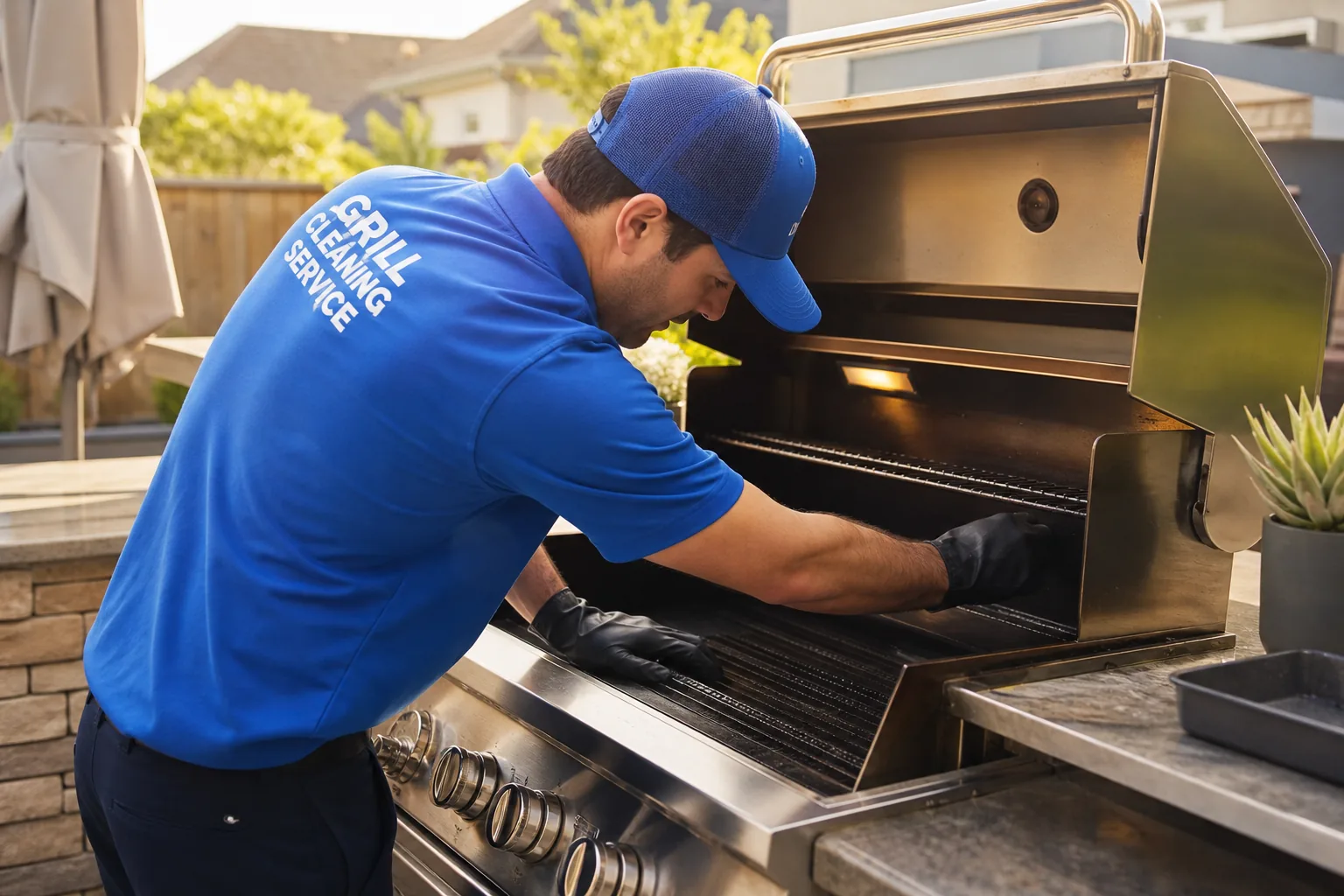
A gas grill knob that’s stuck or hard to turn means one of two things. Either the plastic knob has stripped out where it grips the valve stem, or the brass valve underneath has seized because its factory grease dried out and grime packed the stem. Stop forcing it. A snapped stem turns a cheap knob swap into a full manifold replacement.
We pull control panels off grills all over Colleyville, Grapevine, and Keller, and the stuck-knob call is one of the most common repair visits we run. It’s also one of the easiest problems to make worse. Here’s how to tell what you’re dealing with, what you can safely try yourself, and where the line is.
Why is my gas grill control knob so hard to turn?
Stiff knobs almost always trace back to the valve stem, not the knob itself. Every gas grill burner has a brass control valve bolted to the manifold, the metal tube that runs behind the control panel and feeds gas to each burner. Inside that valve is a tapered plug packed with high-temperature grease at the factory. That grease is what makes the knob turn smoothly.
Heat cooks it out. Every time you run the grill, the manifold heats and cools. Over a few seasons the grease thins, migrates, and hardens. What’s left behind is a dry brass-on-brass fit that grabs. Then grease vapor, patio dust, and spring pollen settle on the exposed stem where the knob sits and bake into a crust. Now the knob is fighting the valve and the gunk at the same time.
On built-in outdoor kitchens it gets worse faster. The valves live in an enclosed cabinet that traps heat and grease vapor with nowhere to vent. That’s the same cabinet where a propane smell usually starts, which is why we always check the manifold when someone reports both.
Is it the knob or the valve? How to tell in 30 seconds
Pull the knob off and turn the bare stem with your fingers. If the stem moves and the knob didn’t, the knob is stripped. If the stem won’t budge, the valve is seized. That single test sorts almost every case.
| What you’re seeing | Likely cause | What it takes to fix |
|---|---|---|
| Knob turns freely, burner stays off or stays on one setting | Stripped knob collar, worn D-shaped stem socket | New knob. Cheap and fast. |
| Knob is stiff but moves with hard pressure | Dried valve grease plus baked-on grime | Clean the stem, service or replace the valve |
| Knob won’t move at all in either direction | Seized valve plug or corroded stem | Valve replacement. Do not force it. |
| Knob turns but won’t click into OFF or LOW positions | Worn valve detent | Valve replacement |
| Knob turns fine, flame stays low on every burner | Not a valve problem at all | Usually the regulator. See our bypass mode fix. |
That last row matters. Plenty of people replace valves that were never broken. If all burners are weak together, look at the regulator first.
How do you free a stiff grill knob without breaking it?
Work cold, work with the gas off, and never use a wrench on a valve stem. Here’s the sequence we use before we ever decide a valve needs replacing.
- Shut off the gas. Close the LP cylinder hand wheel clockwise, or close the natural gas shutoff at your outdoor kitchen. Confirm every knob is in the OFF position.
- Let the grill cool completely. Give it 45 minutes minimum. Hot brass and cold tools break things.
- Remove the knob. Lay a rag on the control panel to protect the finish, then pull the knob straight out while wiggling it side to side. Pry gently under the edge with a plastic trim tool if it’s stubborn. Knobs that have never come off can take real effort.
- Inspect the stem. Most stems are D-shaped, a round post with one flat side. If the flat has rounded off, the knob was slipping and the stem is worn. If the stem looks green or chalky, that’s corrosion.
- Clean the stem and the panel opening. Use a degreaser and a soft brass brush on the exposed stem only. Wipe it dry. Do not spray anything into the valve body or down the manifold.
- Test the stem by hand. Grip the flat with padded needle-nose pliers and apply light pressure. Light. If it moves, work it back and forth a few times and reinstall the knob.
- Leak test before you cook. Mix 50 percent dish soap and 50 percent water, brush it on the regulator, hose, and every connection, then open the gas. Growing bubbles mean a leak. Shut the gas off and stop.
If the stem doesn’t move under light pressure at step six, you’re done. The valve is seized and it needs to come out. Cranking harder is how stems snap off inside the manifold, and at that point you’re replacing the whole assembly.
My knob spins but nothing happens. What’s wrong?
A knob that spins freely has lost its grip on the stem, and the burner is stuck at whatever setting the valve was last left on. The knob is plastic. The stem is brass. Plastic loses that fight every time, especially on grills that live outside through DFW summers where control panel surfaces routinely run well past 150 degrees in the sun.
This one is genuinely a DIY fix. Match the replacement knob to your exact model, not just the brand. Weber alone uses several stem profiles across Spirit, Genesis, and Summit generations. Same for Blaze, Bull, Lynx, Napoleon, and Coyote. A knob that almost fits will strip out again in a season.
When is a stuck grill knob actually a safety problem?
A knob you can’t turn to OFF is a safety problem right now, because your only way to stop gas flow is at the tank or the house shutoff. That’s not a hypothetical. It’s the difference between shutting a burner down in one second and walking around the grill in the dark hunting for a hand wheel.
According to NFPA’s Home Grill Fires report, U.S. fire departments responded to an average of 10,600 home fires involving grills per year during 2014 through 2018, and five of every six grills involved in those fires were fueled by gas. NFPA lists failure to clean and leaks or breaks as the leading contributing factors. Both of those live in the same cabinet as your valves.
There’s a pressure angle too. According to the Backyard Pro LP gas grill manual, the regulator supplied with an outdoor cooking appliance is set for an outlet pressure of 11 inches water column. Everything downstream of that regulator, including the manifold and each valve, is engineered around that number. A cracked valve body or a damaged stem seal leaks gas straight into the enclosed cabinet behind your control panel. The same manual’s troubleshooting section for fire behind the control panel says to shut off the tank valve immediately, then check the burners for obstructions and confirm they’re seated properly over the valves.
Short version: if you smell gas near the knobs, don’t diagnose it. Shut the gas off and call somebody.
Can you lubricate a gas grill valve yourself?
You can clean the exposed stem. You should not be packing lubricant into a live gas valve. This is where a lot of online advice goes sideways.
WD-40 and penetrating oils are the wrong answer. They’re petroleum-based, they flash off, and they leave a residue that gums up worse than what you started with. Anything you put on a gas valve has to be rated for gas valve service and rated for the temperatures inside that cabinet.
Beyond that, properly regreasing a valve means pulling it off the manifold, disassembling the tapered plug, cleaning it, repacking it, and reassembling it to spec, then leak testing the whole manifold. On most premium built-ins, opening the valve body ends the warranty on the part you’re trying to save. Blaze, Lynx, DCS, and Coyote all carry long warranty terms on control valves. Replacing the valve under warranty is usually cheaper and safer than rebuilding it.
Why do DFW grills go through valves faster?
North Texas runs a grill through more punishing heat cycles than almost anywhere else in the country. Weeks of 100-plus days bake the manifold cabinet even when the grill is off. Spring cedar and oak pollen coats every exposed surface, then the first humid night turns it into paste. Sprinkler overspray leaves mineral deposits on stainless and hardware, which is the same problem behind hard water spotting.
Built-in grills in Southlake and Frisco outdoor kitchens see it worst, because the cabinet has no airflow. Cart grills breathe better but sit fully exposed. Neither one is safe from it. Gulf Coast customers in Mobile and Baldwin County deal with a different version of the same thing, where salt air pits brass and stainless hardware year round.
Cleaning the firebox and grease tray on schedule slows all of this down. Grease vapor is what carries grime down onto the valves in the first place. A professional deep clean starts at $239 and includes pulling the internals, which is also when a tech would catch a stiffening valve before it seizes.
Should you repair the valve or replace the grill?
Replace the valve if the firebox is solid. Replace the grill only if the firebox is rusted through. Valves are wear parts. They’re supposed to be replaceable, and on a decent built-in they’re worth replacing for years. We walk through the full decision in our guide on repairing versus replacing a built-in grill.
Valve and manifold parts prices swing hard by brand, so we quote those after we see the unit. Our published rates are on the pricing page, and estimates are free.
Frequently asked questions
Why is my gas grill knob hard to turn?
The brass control valve behind the knob has lost its factory grease. Heat cycles cook that grease out over a few seasons, leaving dry brass that grabs. Grease vapor and pollen then bake onto the exposed valve stem. The knob is fighting both at once. Forcing it can snap the stem off inside the manifold.
Can I spray WD-40 on a stuck grill knob?
No. WD-40 and penetrating oils are petroleum-based, they burn off at grill temperatures, and they leave residue that gums the valve up worse. They also do not belong anywhere near a live gas connection. Clean the exposed stem with a degreaser and a soft brush instead, and leave the valve body alone.
Is it safe to use my grill if one knob is stuck?
Not really. If a knob will not turn to OFF, your only way to stop that burner is the tank valve or the house gas shutoff. That is a slow response during a flare-up. If you also smell gas near the control panel, shut the gas off at the source and do not light the grill.
Why does my grill knob turn but the burner stays on high?
The knob has stripped out where it grips the valve stem, so it spins without moving anything. The burner is locked at whatever setting the valve was last left on. Replace the knob with one matched to your exact model number, not just the brand. Stem profiles vary between generations of the same grill line.
Can a stuck valve cause a gas leak?
Yes. A cracked valve body or a failed stem seal leaks gas into the enclosed cabinet behind the control panel, which is exactly where you do not want it collecting. Run a soapy water leak test on the regulator, hose, and connections any time you work on the gas side. Growing bubbles mean stop.
How often should grill valves be inspected?
Once a year for a grill in regular use, and always after a long idle stretch. Valves get checked as part of a full deep clean, since the technician already has the grates, flame tamers, and burners out. Catching a stiffening valve early is far cheaper than replacing a manifold after a stem snaps.
Do you service built-in grill valves in DFW?
Yes. We handle gas grill diagnosis and repair across Dallas, Fort Worth, Arlington, Colleyville, Grapevine, Keller, Southlake, Plano, and Frisco, including built-in units in outdoor kitchens. Valve and manifold work is quoted after inspection because parts pricing varies by brand and model. Estimates are free.
Get it looked at before it snaps
A stiff knob is a warning. A snapped stem is a repair bill. If yours is fighting you, get it diagnosed before you force it one more time.
Book online at texasgrillclean.com/book-appointment or call (817) 791-4606. We handle gas grill repair and deep cleaning across the DFW Metroplex. Check our service areas to confirm we cover your city, or see the Colleyville grill cleaning page if you’re on the north side.
Texas Grill Clean is part of 1st Choice Residential. Veteran-owned, locally owned rather than a franchise, and serving Dallas-Fort Worth since 2009. Licensed and insured. Free estimates.
3302 Westgrove Drive, Arlington, TX 76001 · (817) 791-4606 · jeff@texasgrillclean.com