
 3302 Westgrove Drive Arlington, TX 76001


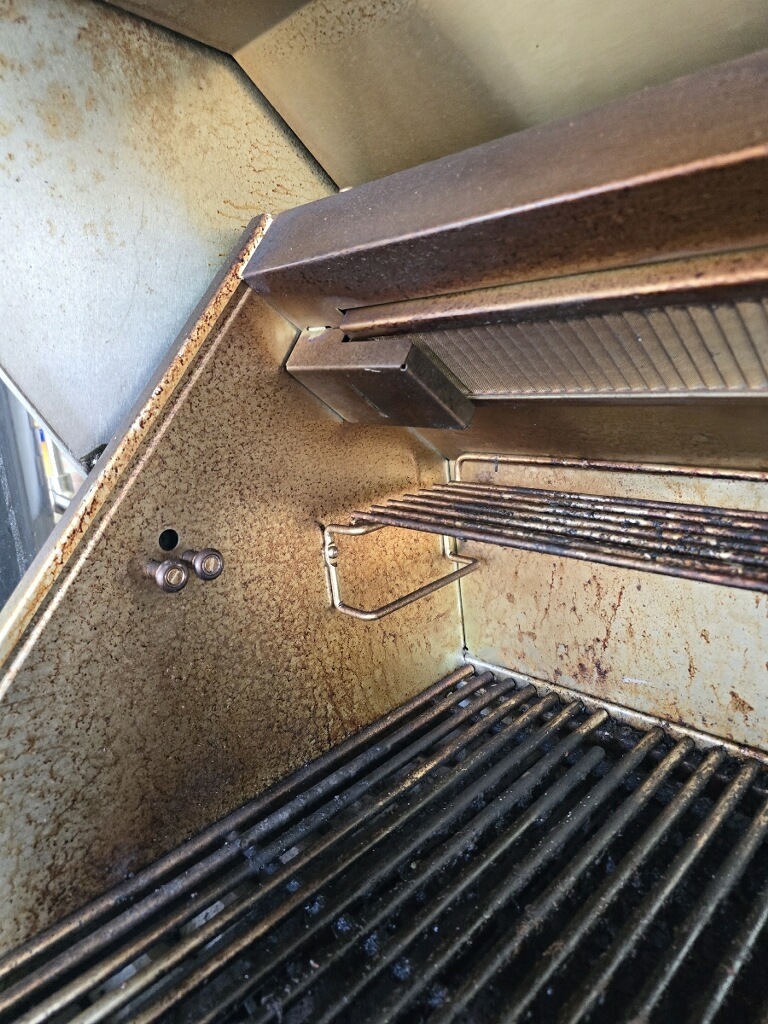
Your grill flares up because fat is landing on something hot enough to light it. Nine times out of ten that something is a grease-soaked flame tamer, a carbon-caked cooking grate, or a drip tray that nobody has emptied in months. Fatty cuts and heavy oiling make it worse. Clean those three parts and most flare-ups stop.
What is a flare-up, actually?
A flare-up is grease burning, not gas burning. When fat drips off your food, it lands on the flame tamers (also called heat plates or diffusers) that sit over the burner tubes. Fresh drippings vaporize and burn off in a second or two. That is normal. The problem starts when old grease has already built up on those parts. Now the new drip lands on a fuel source that is already there, and instead of a two-second puff you get a column of flame that licks up through the grates.
Charcoal and pellet grills flare too. On a kettle, fat drops straight onto live coals. On a pellet grill, it pools on the drip shield above the firepot. Same physics, different hardware.
Why does my grill flare up more than it used to?
Because grease has been accumulating since the last real cleaning, and grease is fuel. A grill that has been cooked on twenty times since its last deep clean is carrying a layer of polymerized fat on the flame tamers, on the underside of the lid, and inside the firebox. Every cook adds to it.
Three other things speed it up in North Texas. Heat, first. Grand Prairie and Arlington summers keep the firebox hot enough that grease bakes into carbon instead of running off into the tray. Second, drainage. Grease is supposed to flow down the slope of the firebox into the tray. When the channel is packed, it sits and pools. Third, foil. A lot of homeowners line the drip tray or the cook box with aluminum foil to save cleanup. Weber specifically warns against lining the slide-out grease tray or cook box, because foil blocks the drainage path and traps grease right where the heat is.
Which part is actually causing my flare-ups?
Match what you see to the part underneath it. Flare-ups are not random. Where and when the flame appears tells you what to clean.
| What you see | Likely cause | Fix |
|---|---|---|
| Flame shoots up seconds after food goes on, then dies | Normal fat vaporizing | Nothing. Move food to a cooler zone if it gets tall. |
| Tall flames that keep burning after the drip is gone | Grease loaded on flame tamers | Pull and scrape the flame tamers, or replace them if pitted through |
| Flames in the same one or two spots every cook | Carbon buildup on a specific tamer or grate section | Deep clean that zone; check the burner below for blocked ports |
| Fire under the control panel or near the tank | Grease fire or a leak, not a flare-up | Shut the gas off at the tank or valve. Do not open the lid. Call for service. |
| Flames plus heavy black smoke and bitter food | Old grease burning in the firebox | Full deep clean; see why grilled food tastes bitter |
| Constant flare-ups on a pellet grill | Grease pooled on the drip shield, ash around the firepot | Scrape the drip shield, vacuum the firepot area |
How do I stop flare-ups on a gas grill?
Work from the top down and finish with the tray. The order matters, because scraping the grates drops debris onto the parts underneath.
- Burn off first. Close the lid, run all burners on high for 10 to 15 minutes. This carbonizes surface grease so it will scrape instead of smear.
- Shut it down and let it cool. Everything past this point happens cold. Cut the gas at the tank or the shutoff valve.
- Brush the grates. Use a bristle-free scraper or a nylon brush on porcelain. Never steel wool on porcelain-enameled grates.
- Pull the flame tamers. Lift them out, scrape both sides with a putty knife, and check for holes rusted through. A tamer with a hole lets fat fall straight onto the burner.
- Scrape the firebox. Push loose carbon down the slope toward the grease channel. Clear the drain hole with a screwdriver if it is packed.
- Empty and wipe the drip tray. Not just dump it. Wipe it. Dried grease at the bottom still burns.
- Skip the foil. If you want a liner, use a manufacturer-approved disposable drip pan that sits in the catch pan, not foil laid across the tray or cook box.
On the cooking side, Weber’s own flare-up guidance is short and worth following: wipe the catch-pan, preheat properly, brush the grates, trim excess fat from your meat, and do not over-oil the food. Most homeowners are heavy-handed with oil and never think about it again.
Are grill flare-ups dangerous?
A brief flare-up is not dangerous. A grill with years of grease in it is. According to the National Fire Protection Association, the grill had not been cleaned in more than one-quarter (29 percent) of home grill structure fires. That is the single most common contributing factor in the data.
The line between a flare-up and a grease fire is whether the fuel runs out. A flare-up ends when the drip burns off. A grease fire feeds on the buildup and keeps going. If flames are coming from under the firebox or around the control panel, close the gas supply and step back. Do not throw water on it. Water spreads burning grease.
Our crews see the worst buildup on grills under covered patios and in built-in islands, because the owner rarely looks at the underside. A cart grill gets rolled around and inspected. A built-in gets a lid opened and closed and nothing else.
Do flare-ups affect how the food tastes or how safe it is?
Yes on taste, and there is real research on the chemistry. The smoke from a flare-up is not clean smoke. It carries burnt fat compounds that deposit on whatever is over them.
According to the National Cancer Institute, polycyclic aromatic hydrocarbons (PAHs) form when fat and juices from meat grilled over an open fire drip onto the fire, causing flames and smoke, and that smoke contains PAHs that adhere to the surface of the meat. NCI also notes that population studies have not established a definitive link between these compounds from cooked meats and cancer in humans, so this is worth knowing rather than worrying about. Practically: fewer flare-ups means less charring, less black smoke, and food that tastes like the meat instead of the grill.
When should a DFW homeowner call a pro instead of scrubbing?
Call when the buildup is baked on hard, when the grill is built into an island, or when the flare-ups keep coming after a full cleaning. Polymerized grease does not come off with a brush and dish soap. It has to be scraped and dissolved, and the flame tamers, burners, and firebox have to come out to do it right.
If you have cleaned everything and one burner still throws flames, the problem may be below the tamer. A cracked burner tube or a blocked venturi changes how the flame sits. That is a repair question, not a cleaning question, and it is covered under gas grill repair.
Texas Grill Clean does a full teardown grill restoration and deep cleaning starting at $239. Grates, flame tamers, burners, firebox, drip tray, and exterior. See current pricing or the Grand Prairie service page for local details. We also cover Arlington, Fort Worth, Dallas, Colleyville, and McKinney. Related reading: how often to empty your grease tray and why your grill will not sear.
Frequently asked questions about grill flare-ups
Is it normal for a grill to flare up a little?
Yes. A short burst of flame when fat hits a hot surface is normal and it burns off in a couple of seconds. What is not normal is a flame that keeps burning after the drip is gone, or flames that appear in the same spot on every cook. Those point to grease already sitting on the flame tamers or in the firebox.
Should I close the lid or open it during a flare-up?
For a small flare-up, move the food to a cooler zone and let the fat burn off with the lid open so you can watch it. For a fire that will not stop on its own, shut the gas off at the tank or valve and keep the lid closed to starve it of air. Never pour water on burning grease.
Does aluminum foil in the bottom of my grill cause flare-ups?
It can. Weber warns against lining the slide-out grease tray or the cook box with foil because it blocks the drainage path grease is supposed to follow. Trapped grease sits close to the heat and burns. Use a manufacturer-approved disposable drip pan inside the catch pan instead of foil laid across the tray.
Why does my brand new grill flare up?
New grills flare for different reasons than dirty ones. Usually it is too much oil on the food, a fatty cut like chicken thighs or ribeye, or not enough preheat so grease pools instead of vaporizing. Trim visible fat, go lighter with oil, and preheat until the grates are fully up to temperature before food goes on.
Can flare-ups damage my grill?
Repeated heavy flare-ups warp flame tamers, burn out burner tubes early, and cook grease onto the inside of the lid where it hardens and eventually flakes off onto your food. The damage is gradual rather than sudden. Grills that flare constantly tend to need burners and tamers replaced years sooner than grills that are kept clean.
How often should I clean my grill to prevent flare-ups?
Empty and wipe the drip tray every two or three cooks. Brush the grates after every cook while the grill is still warm. Do a full teardown cleaning of the flame tamers, burners, and firebox once or twice a year, more often if you grill weekly or cook a lot of fatty food.
Do pellet grills and charcoal grills flare up too?
Yes. On a charcoal kettle, fat drips straight onto live coals. On a pellet grill, grease collects on the drip shield above the firepot and can ignite once the layer gets thick. Scrape the drip shield and vacuum ash from around the firepot regularly, and set up a two-zone fire on charcoal so you have somewhere to move food.
Get the grease out and the flare-ups stop
Most flare-up problems are cleaning problems wearing a costume. Pull the grates, pull the tamers, scrape the box, and wipe the tray, and the same grill that scorched your chicken last weekend behaves like it did when it was new.
Ready to hand it off? Book an appointment or call (817) 791-4606. Texas Grill Clean is part of 1st Choice Residential, veteran-owned and locally owned rather than a franchise, serving Dallas-Fort Worth since 2009. Licensed and insured. Free estimates.