
 3302 Westgrove Drive Arlington, TX 76001


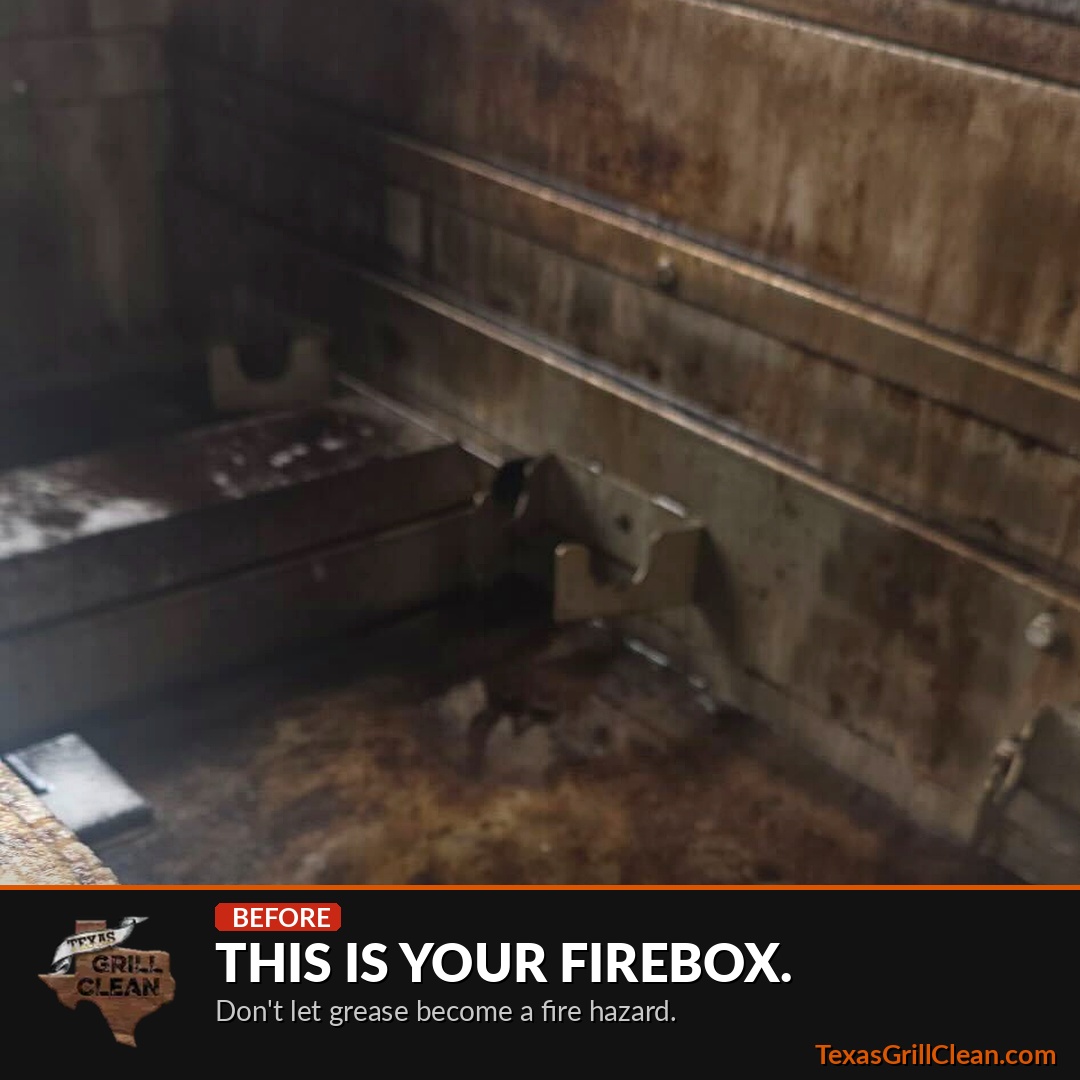
Empty your grill’s grease tray every two or three cooks, and always before it reaches half full. After a high-fat cook like burgers, wings, or ribeyes, empty it that same day. Weber tells owners to empty the grease catch and replace the drip pan after every cook. A full tray is the single most common fire risk on a backyard grill.
That is the short answer. The longer answer is that most homeowners in Frisco, McKinney, and Allen have never looked at their grease tray at all, because on a built-in grill it sits in a cavity below the firebox where nobody thinks to check. Our crews pull trays every week that have not been touched in three or four years. Here is how the system works, what the manufacturers actually say, and how to know when the grease has gotten past the tray.
How often should you empty a grill grease tray?
Every two to three cooks for normal grilling, and after every cook when you are cooking anything fatty. The frequency depends less on the calendar and more on what you cook. Chicken thighs, ground beef, bacon, and pork shoulder dump far more fat than vegetables or fish. One brisket can fill a tray that would otherwise last a month.
Every manufacturer publishes its own guidance, and the systems are not the same. Here is what the major brands say:
| Grill type | Where the grease goes | How often to empty or replace |
|---|---|---|
| Weber Genesis and Spirit gas grills | Slide-out grease tray with a disposable catch pan below the firebox | According to Weber, empty the grease catch and replace the drip pan after each cook, or when it is more than half full |
| Traeger and other pellet grills | Angled drip tray that drains into a hanging grease bucket with a liner | According to Traeger support, scrape the drip tray after each use, replace the bucket liner when full, and deep clean the drip tray at least twice a year |
| Blackstone griddles | Rear or front grease cup with a disposable liner | Per Blackstone’s care guide, discard and replace the liner once it fills |
| Built-in gas grills (Blaze, Lynx, DCS, Coyote, Alfresco, Bull) | Removable drip pan seated in the island or cart cavity under the firebox | Check every two to three cooks. These are hidden inside the island, so they get forgotten the longest |
| Charcoal kettles and kamados | Ash catcher or foil pan below the firebowl | Empty once the ash is fully cold, after each cook |
If you only remember one rule, use the half-full rule. Grease that reaches the rim will slosh over the edge the next time you slide the tray, and once it is on the cart floor or the island deck, it is no longer a five-minute job.
What is the difference between a grease tray, a drip pan, and a grease cup?
The tray is the fixed metal channel that catches and funnels grease, the drip pan is the disposable liner that sits inside it, and the grease cup is the removable container that catches what drains out. Mixing these up is why people think their grill has no grease system at all.
- Grease tray. A sloped steel or aluminized pan bolted or slotted under the burner box. It is part of the grill. You clean it, you do not throw it away.
- Drip pan or catch pan. A disposable aluminum insert that drops into the tray or clips underneath. Weber’s are foil. Traeger sells liners for both the drip tray and the bucket. These are single-use.
- Grease cup or bucket. The container hanging off the side or back. Common on Traeger, Blackstone, Pit Boss, Camp Chef, and Green Mountain.
Above the tray sit the flame tamers, sometimes called heat deflectors, ceramic briquettes, or vaporizer bars depending on the brand. Their job is to burn off drippings before they ever reach the tray. When they are caked with carbon, they stop vaporizing and start channeling. More grease reaches the tray, and it reaches it faster.
What happens if you never empty the grease tray?
Grease overflows the tray, pools in the firebox and the cart floor, and becomes fuel sitting directly under an open flame. This is not a theoretical risk. It is the leading cause of grill fires in the country.
According to the National Fire Protection Association, U.S. fire departments responded to an annual average of 12,141 home fires involving grills, hibachis, or barbecues between 2020 and 2024, and roughly one in five of those fires was caused by a grill that had not been cleaned. Failure to clean is the number one contributing factor, ahead of placing the grill too close to something flammable and ahead of leaving it unattended.
The failure sequence our techs see most often runs like this. The tray fills. Grease creeps past the lip and coats the bottom of the cart. Old grease dries into a hard carbon crust on the firebox floor and up the inside walls. A high-heat sear session lights that crust. Now there is a fire under the burners, where a lid-close will not smother it, and there is nothing to burn out but the grill itself.
Short of a fire, an overfull tray causes the everyday problems people call us about: constant flare-ups, food that tastes sour or acrid, and smoke that will not clear. If your steaks have started tasting off, that is worth reading about separately in why grilled food tastes bitter. For the safety side, see our full guide on preventing grease fires on your BBQ grill.
How do you clean a grill grease tray safely?
Work on a fully cold grill, scrape before you wash, and never spray water into the firebox. The whole job takes about fifteen minutes on a grill that gets emptied regularly.
- Let the grill go completely cold. Give it several hours. Warm grease is liquid, it runs where you do not want it, and it burns skin.
- Shut off the gas. Close the propane tank valve or the natural gas shutoff at the island before you reach under the firebox.
- Slide the tray out slowly and keep it level. Most trays pull from the front. On a built-in, open the access door below the grill head. Tilting it is how grease ends up on the deck.
- Scrape the solids out first. Use a plastic putty knife or a wooden scraper into a lined trash can. Do not use a wire brush on the tray. It gouges the coating and gives grease somewhere to grab.
- Wash with hot water and dish soap. Degreasing dish soap breaks fat. Let it sit five minutes, then wipe. Skip oven cleaner on aluminized trays, since the lye eats the coating.
- Dry it completely before it goes back. A damp tray in a hot firebox is how rust starts, and DFW humidity in September will not dry it for you.
- Check the firebox floor while the tray is out. Shine a light up into the cavity. If you see hard black crust on the floor or up the walls, the grease already got past the tray.
- Replace the disposable pan, not just the contents. Foil catch pans are made to be thrown away. Scraping and reusing one leaves a residue film that fills faster next time.
One thing not to do: do not aim a hose or a pressure washer at any of it. Water forced into burner tubes, orifices, and igniter wiring causes more repair calls in DFW than grease ever does.
Why does grease build up faster on grills in Dallas-Fort Worth?
Long grilling seasons, high heat, and heavy humidity all speed up the cycle here. North Texas homeowners grill nine or ten months a year, so a DFW grill sees roughly double the cooks of one in a colder state before it ever gets a seasonal cleaning.
Summer heat bakes spilled grease into a hard varnish instead of leaving it soft and wipeable. Gulf humidity moving up through Dallas and Fort Worth keeps the residue tacky enough to catch dust, pollen, and grass clippings, which is why the crust on a Plano or Southlake grill is usually thicker and more layered than the same grill in a dry climate. Then there is the outdoor kitchen factor. In Frisco, McKinney, and Colleyville, most of what we service is a built-in grill head dropped into a stone island, and the drip pan lives behind a closed access door that nobody opens between listing photos and the day something breaks.
When is grease buildup past the point of a DIY clean?
When the grease is no longer in the tray. Emptying a tray is homeowner maintenance. Removing baked carbon from the firebox, burner tubes, flame tamers, and the island cavity is not, because it means pulling the cooking system apart.
Call for a professional deep clean if you see any of these:
- Hard black crust on the firebox floor or walls that does not scrape off
- Grease that has run out of the cart and stained the island stone, deck, or patio
- Flare-ups on every cook even with a freshly emptied tray
- A tray that has rusted through, so grease drips straight into the cavity
- Any grill that has gone more than two seasons without the burners coming out
A full grill restoration and deep cleaning takes the unit down to components: grates out, flame tamers out, burners out, firebox scraped and degreased, tray and cavity cleaned, then reassembled and test-fired. Our grill deep clean starts at $239, and the full list is on our pricing page. If you are not sure which service you need, our professional grill cleaning page walks through what is included, and estimates are free.
We work the whole Metroplex. See grill cleaning in Frisco, grill cleaning in McKinney, or the full service areas list.
Frequently asked questions
How often should I empty my grill’s grease tray?
Empty it every two to three cooks under normal use, and after every cook when you grill burgers, wings, bacon, or other fatty foods. Never let it pass half full. Weber’s own guidance is to empty the grease catch and replace the disposable drip pan after each cook, which is the safest habit to build if you grill often.
Can I just line the grease tray with aluminum foil?
Yes, on most gas grills, as long as the foil lies flat and does not block the drain hole or touch a burner. Foil makes emptying faster. It does not replace cleaning the tray itself, because grease still seeps under the edges. Check your owner’s manual first, since a few brands specifically prohibit foil in the firebox.
What happens if grease overflows out of the tray?
It pools in the cart floor or the island cavity under the grill and hardens into carbon. That crust sits directly beneath open burners, so a hot sear can ignite it. Overflow also causes constant flare-ups and off-tasting food. Once grease is outside the tray, scraping the tray alone will not fix it.
Does the grease tray need to be washed, or just emptied?
Both. Emptying removes the liquid and solids. Washing removes the thin film left behind, which is what the next round of grease sticks to. Scrape the tray, wash it with hot water and degreasing dish soap, then dry it completely before it goes back in. Skip wire brushes and oven cleaner on coated trays.
Can you pour old grill grease down the drain?
No. Cooking grease solidifies in cold pipes and is a leading cause of household drain clogs and municipal sewer blockages. Let the grease cool and harden, then scrape it into a sealed container or a lined trash can and throw it away with household waste. Never pour it into a yard drain or storm drain either.
How do I know if grease got past the tray and into the grill?
Pull the tray out and shine a flashlight up into the cavity. Clean metal means the system is working. Hard black crust on the firebox floor, on the walls, or dripping down the inside of the island means grease has been overflowing for a while. At that point the grill needs to come apart to be cleaned properly.
Will emptying the grease tray stop flare-ups?
It helps, but it is usually not the whole fix. Flare-ups come from drippings hitting something hot, so caked flame tamers, dirty grates, and grease already burned onto the firebox all contribute. If flare-ups continue after you empty the tray and scrub the grates, the buildup is deeper in the cooking system.
Get the grease out before it becomes a fire
Emptying a grease tray takes five minutes. Repairing a grill that caught fire does not. If yours has not been pulled in a season or more, book a deep clean and let us handle what is under the firebox.
Book online at texasgrillclean.com/book-appointment or call (817) 791-4606. More answers are on our FAQ page.
Texas Grill Clean is part of 1st Choice Residential, veteran-owned and locally owned, serving Dallas-Fort Worth since 2009. Licensed and insured. Free estimates. 3302 Westgrove Drive, Arlington, TX 76001.