
 3302 Westgrove Drive Arlington, TX 76001


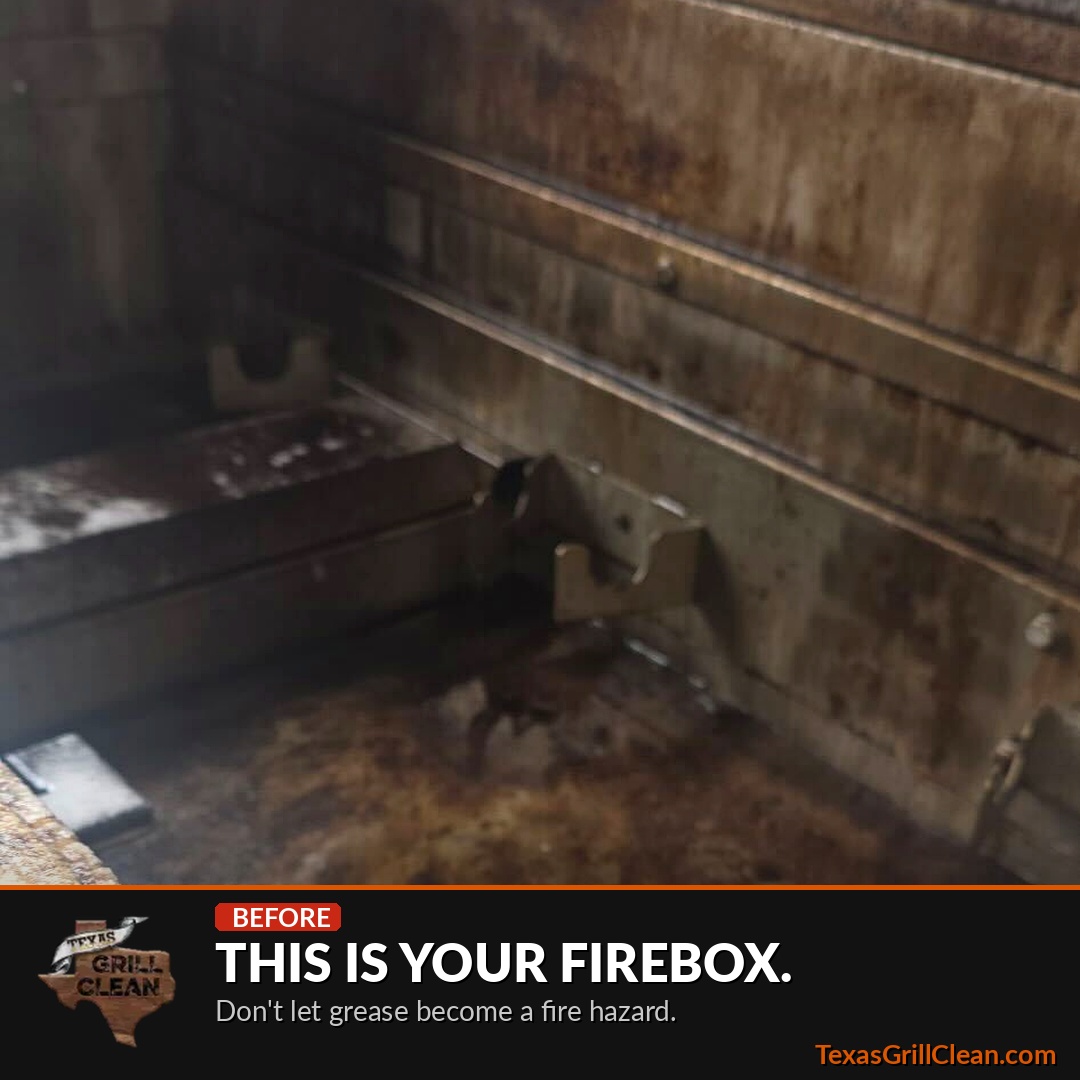
Bitter grilled food almost always comes from the grill, not the groceries. Old grease on the flame tamers, loose carbon flakes on the grates, and heavy dark smoke from incomplete combustion all deposit bitter compounds directly onto your food. Clean the grates, the diffusers, and the drip pan, and the bitterness goes away.
We hear this one constantly on service calls across Colleyville, Grapevine, and Keller. The homeowner swears the meat is fine. They changed rubs. They switched pellet brands. Food still tastes like an ashtray. Then we pull the grates and the answer is sitting right there in the firebox.
What actually makes grilled food taste bitter?
Four things cause bitter flavor on a grill: creosote from smoldering smoke, rancid grease, carbon flakes falling off the hood, and cleaner residue left behind on the grates. All four are buildup problems. None of them are cooking problems.
Creosote is the big one on smokers and pellet grills. It’s the tarry residue left over when wood doesn’t burn completely. A clean fire gives you thin blue smoke and the sweet compounds that make barbecue taste like barbecue. A choked, smoldering fire gives you thick gray smoke loaded with tar. That tar condenses on cold meat and tastes sharp and chemical.
Rancid grease is the big one on gas grills. Fat that dripped onto the firebox floor three months ago has oxidized. When it reheats, it doesn’t smell like cooking. It smells like an old fryer, and that flavor transfers.
How do I tell which problem I have?
Match the flavor to the source. Each type of buildup has its own taste signature and its own hiding spot. Here’s the diagnostic table our crew works from in the field.
| What it tastes like | Likely cause | Where to look |
|---|---|---|
| Sharp, acrid, sticks in the back of your throat | Creosote from smoldering smoke | Firepot, heat diffuser, chimney, damp pellets |
| Greasy and sour, like old fryer oil | Rancid grease | Drip pan, grease tray, firebox floor |
| Ashy and chalky on the outside of the food | Carbon flakes dropping off the hood | Underside of the lid and warming rack |
| Metallic or soapy | Cleaner residue or failed grate coating | Cooking grates, flame tamers |
| Scorched outside, raw inside | Flare-ups from grease on the tamers | Flame tamers, Weber Flavorizer bars, burner tubes |
Why does old grease taste worse than fresh smoke?
Fresh drippings vaporize and add flavor. Old drippings have already broken down into carbon and oxidized fat, and those taste bitter every time they reheat. That’s the whole difference.
A grill is designed to burn drippings off as they fall. Weber Flavorizer bars, Lynx ceramic briquettes, and DCS ceramic rods all exist for that reason. They catch fat, flash it into steam, and send flavor back up. Once those tamers are caked in black crust, they stop vaporizing and start smoldering.
The same thing happens inside a pellet grill. According to Traeger’s own cleaning guidance, the grease trap needs emptying on a regular schedule and the cookbox needs a full cleanout roughly once a season. Skip that and the drip tray becomes a griddle for old fat.
Is a bitter-tasting grill also a safety problem?
Sometimes. Heavy grease buildup is the same condition that drives grill flare-ups and grease fires, and heavy smoke deposits more unwanted compounds on your food. The flavor is the warning light.
According to the National Cancer Institute, polycyclic aromatic hydrocarbons form when fat and juices drip onto a heated surface or open flame, and the resulting smoke sticks to the surface of the meat. The NCI also notes that heterocyclic amines tend to form more readily in meat cooked above 300°F or cooked for a long time. Both compounds have been shown to be mutagenic in laboratory testing, though the NCI is clear that population studies have not established a definitive link to cancer in humans.
Less standing grease means less smoke, and less smoke means less residue landing on dinner. For the fire side of this, read our guide on preventing grease fires on your BBQ grill.
How do I get rid of the bitter taste?
Work top to bottom, and don’t stop at the grates. The grates are usually the cleanest part of a bitter grill. Here’s the order that actually clears the flavor.
- Burn it off first. Run the grill on high with the lid closed for 15 minutes. According to Weber’s deep-cleaning guidance, preheating until residue burns off makes the remaining debris far easier to brush away while the grate is still hot.
- Scrape the underside of the hood. That black flaking isn’t paint. It’s carbonized grease, and it falls onto your food. Use a plastic scraper or a wadded ball of foil, never a wire brush.
- Pull the grates and the flame tamers. Scrape both sides of the tamers down to bare metal. This is the step most homeowners skip and the one that fixes the most cases.
- Empty the firebox floor. Scrape the carbon out with a putty knife and vacuum the debris. On a pellet grill, empty the firepot and check that the burn holes are clear.
- Degrease the drip pan and grease tray. Replace disposable liners. Wash reusable trays with hot water and dish soap, then dry them fully.
- Rinse everything and dry it. Any cleaner left on a grate will taste like soap on your next cook. Then re-season cast iron grates with a thin coat of high smoke point oil.
- Run one hot empty cycle. Fifteen minutes at high heat before you cook again burns off anything you missed.
If your grates are pitted, flaking, or shedding coating, cleaning won’t save the flavor. See our guide on restoring and seasoning cast iron grill grates to figure out which ones are worth keeping.
When is it worth calling a pro instead?
Call a pro when the buildup is thick enough that scraping isn’t touching it, or when the grill is a built-in you’d rather not disassemble yourself. That’s most grills at the two-year mark in North Texas.
DFW is hard on grills. Spring cedar and oak pollen, hard water spotting, and 100-degree stretches bake grease into carbon no household cleaner will lift. On built-ins from Blaze, Bull, Coyote, Lynx, and Alfresco, reaching the manifold, orifices, and burner tubes means pulling the head. That’s where the worst buildup hides.
Our professional grill cleaning service starts at $239 for a full deep clean. For grills that have gone several seasons without service, grill restoration and deep cleaning takes it further. Current rates are on our pricing page, and homeowners in northeast Tarrant County can check details on our Colleyville grill cleaning page.
Frequently asked questions
Why does my grilled food taste bitter all of a sudden?
Buildup crosses a threshold. Grease and carbon accumulate slowly, and at some point there’s enough to smolder instead of burn off. Nothing changed about your food or your technique. The grill simply reached the point where old residue produces more smoke than the fire can consume cleanly.
Can a dirty grill really change how food tastes?
Yes, and it’s the single most common cause of off-flavor we find. Carbonized grease produces acrid smoke, and that smoke coats whatever is on the grates. Rubs, marinades, and meat quality can’t overcome it. A deep clean usually restores normal flavor on the very next cook.
Does burning my grill on high fix the bitter taste?
Partly. A hot burn-off clears light residue from the cooking grates, which is why manufacturers recommend it. It does not remove hardened grease from flame tamers, the firebox floor, or the underside of the hood. Those need physical scraping. Burn-off is maintenance, not a substitute for cleaning.
Why does my pellet grill food taste like ash?
Usually creosote from an incomplete burn. Damp pellets, a firepot packed with ash, or a clogged induction fan all starve the fire of clean combustion. The result is thick gray smoke instead of thin blue smoke. Empty the firepot, store pellets sealed and dry, and check that the burn holes are clear.
Will food from a bitter-tasting grill make me sick?
Bitter flavor by itself isn’t a foodborne illness risk. The real concerns are old grease that has gone rancid, and raw meat residue left on grates from a previous cook. Heat your grates to full temperature before every cook, and clean the firebox on a schedule rather than waiting for a taste problem.
How often should I deep clean my grill in DFW?
Once or twice a year for most households, and twice for anyone grilling weekly. North Texas heat bakes grease into carbon faster than milder climates, so grills here need service sooner than the manual suggests. Heavy entertainers and outdoor kitchen owners often go with two visits a year.
Does my grill brush affect the taste?
It can. A worn wire brush sheds bristles that end up in food, and a brush loaded with old grease just smears it around. Replace brushes when the bristles splay out. On porcelain-coated or cast iron grates, use a coiled or bristle-free scraper to avoid stripping the finish.
Get the bitterness out for good
If you’ve cleaned the grates twice and the food still tastes off, the problem is deeper in the grill than a brush will reach. We’ll pull it apart, degrease the firebox, clear the burner ports, and put it back together working the way it did new.
Book your grill cleaning online or call (817) 791-4606. Deep cleans start at $239, estimates are free, and we’re licensed and insured.
Texas Grill Clean is part of 1st Choice Residential, veteran-owned and serving Dallas–Fort Worth since 2009. 3302 Westgrove Drive, Arlington, TX 76001 · (817) 791-4606 · jeff@texasgrillclean.com. See our full service areas.