
 3302 Westgrove Drive Arlington, TX 76001


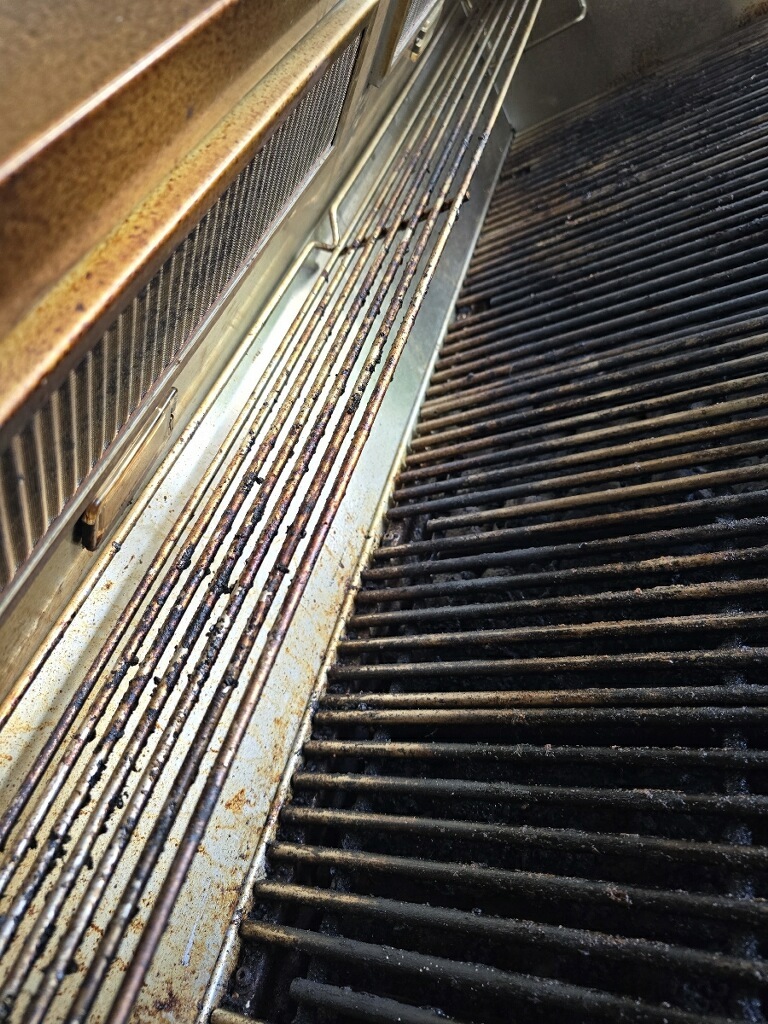
Food sticks to grill grates for two reasons, and neither one is the meat. The grate is too cold, or it is coated in old carbon and grease. A hot, clean grate releases food on its own. Preheat 15 minutes with the lid closed, scrape the grate while it is hot, oil the food instead of the grate, and the sticking stops.
We hear this one every week from homeowners in Southlake, Colleyville, Grapevine, and across Fort Worth. Usually it starts with chicken thighs leaving half their skin behind. Here is what is actually happening on that grate, and how to fix it for good.
Why does food stick to grill grates in the first place?
Food sticks because raw protein bonds to metal that is not hot enough to release it. When meat hits a warm-but-not-hot grate, surface moisture doesn’t flash off. It sits there. The proteins on the underside of the meat soften, seep into every microscopic pit and scratch in the metal, and set up like glue as they slowly cook.
On a properly hot grate, the opposite happens. Surface moisture vaporizes on contact, the protein sets fast into a crust, and the food lifts free after a minute or two without you prying at it.
According to Weber’s own support guidance, a cold grate is the cause of sticking, and Weber tells owners to preheat the grill for 15 to 20 minutes before any food goes on.
The second cause is buildup. Old carbon on a grate is not smooth. It’s a rough, porous shell with thousands of places for protein to grab. That is why the same grill that released steaks cleanly two summers ago now fights you over a chicken breast.
How hot do grill grates need to be before food goes on?
Most food needs a grate surface of at least 400°F, and searing needs 500°F or hotter. That is grate temperature, not the number on the dome dial.
According to ThermoWorks, searing meat calls for the grate to reach 500°F to 550°F, which takes about 15 minutes of preheating. Weber says a grill preheated with the lid closed and all burners on high should hit roughly 500°F under the hood.
| What you’re cooking | Target grate temp | Preheat time (lid closed) |
|---|---|---|
| Steaks, burgers, chops | 500–550°F | 15 minutes |
| Chicken pieces, sausage | 400–450°F | 12–15 minutes |
| Fish fillets, shrimp | 450–500°F | 15 minutes |
| Vegetables, fruit | 400°F | 10–12 minutes |
The dome thermometer will not tell you this. It reads air at the top of the hood, several inches above where your food actually sits. If you want to know what the grate is doing, check it with an infrared thermometer or a probe placed an inch above the bars. We wrote more about that in our guide to whether your grill’s lid thermometer is accurate.
Should you oil the grate or the food?
Oil the food, not the grate. Oil brushed onto a 500°F grate is already past its smoke point before you close the lid. It burns, turns to carbon, and adds another rough layer for the next cook to stick to. You end up making the problem worse one cook at a time.
Pat the food dry first. A wet surface steams instead of searing, and steamed protein sticks. USDA’s Food Safety and Inspection Service tells home cooks to pat poultry dry after marinating before it goes on the heat. Then brush a thin coat of a high-smoke-point oil, like canola or avocado, directly onto the meat or vegetables.
Thick marinades make sticking worse, not better. Sugar-heavy sauces scorch onto the bars almost immediately. Save the barbecue sauce for the last few minutes of the cook.
Does a dirty grate make food stick more?
Yes, and it’s usually the bigger factor of the two. A grate with a hard carbon shell on it cannot release food no matter how hot you run the grill. The surface itself is wrong.
The layer you’re fighting isn’t dirt. It’s polymerized grease, the same stuff that flakes off the underside of a grill lid. It bakes harder every cook. Store-bought brushes skim the top of it and leave the base layer welded to the metal. That’s why grates that “look fine” still grab.
USDA FSIS advises scraping old residue off the grate, washing the surface, and then running the grill hot before food goes on, in its grilling food safety guidance.
Why do fish and chicken skin stick worse than steak?
Because they have less fat rendering out underneath them and more soluble protein on the surface. A ribeye lays down its own fat as it cooks. A skinless fish fillet or a lean chicken breast has almost nothing to work with.
Delicate proteins also need to be left alone longer. Most food releases itself once the crust forms. If you slide a spatula under a fillet after 30 seconds, you’ll tear it. Give it 90 seconds to two minutes and it usually lets go on its own.
How do you stop food from sticking to the grill? (7 steps)
- Preheat with the lid closed for a full 15 minutes. All burners on high. No shortcuts. This is the single biggest fix.
- Scrape the grate while it’s hot. Heat softens residue. Use a stainless scraper or a grate-safe tool, and use a nylon brush on porcelain-coated bars.
- Check the grate temperature, not the dome dial. An infrared thermometer aimed at the bars takes two seconds.
- Pat the food dry. Paper towels. Surface water is the enemy of release.
- Oil the food, not the grate. Thin coat of canola or avocado oil, brushed on right before it goes down.
- Leave it alone. 90 seconds minimum before you try to move anything. Let the crust form and the food will release itself.
- Burn off after the cook. Run the burners on high for 10 to 15 minutes with the lid closed, then brush the grate clean while it’s still hot.
Does grate material change how much food sticks?
It changes how you maintain the grate more than it changes the sticking itself. Bare cast iron releases beautifully when it’s seasoned and terribly when it isn’t. Porcelain-enameled cast iron is slick from the factory, but once the coating chips, food catches on the exposed metal. Stainless holds up well but needs the same heat as anything else.
If you’re weighing a replacement set, we broke the three down side by side in cast iron vs stainless vs porcelain grill grates. And if the coating on yours is already chipping, our guide to cleaning porcelain grill grates without chipping them covers what to use and what to keep away from them.
When is sticking a sign the grill needs professional service?
When you’ve cleaned the grates and the food still sticks, the problem is under them. Grease-soaked flame tamers, clogged burner ports, and a carbon-packed firebox all steal heat before it ever reaches the cooking surface. The grill runs 150°F cooler than the dial claims and every cook sticks.
That’s the same root cause behind a grill that won’t sear. It’s a heat delivery problem, not a grate problem.
Our crews see it constantly on built-ins that have never been pulled and serviced. The grates get brushed. The firebox never does. A full grill restoration and deep cleaning takes the unit apart, strips the carbon off the flame tamers and burner tubes, and gets the heat back to where it belongs. Deep cleans start at $239. Full pricing is on our pricing page.
Frequently asked questions
Why does my food stick even on a brand-new grill?
New grates come coated in manufacturing oils and are often not seasoned. They also get used before the grill is fully preheated, because owners assume a new grill heats faster. Run the grill empty on high for 15 minutes before the first cook, then oil your food rather than the bars. Most new-grill sticking clears up after two or three cooks.
Should I oil the grate or the food?
Oil the food. Oil brushed on a hot grate passes its smoke point in seconds, burns, and leaves carbon that makes the next cook stick worse. Pat the food dry, then brush a thin coat of canola or avocado oil directly onto the meat or vegetables right before they go down on the grate.
Does a cold grate really cause sticking, or is it the grate material?
Temperature matters more than material. Weber’s support guidance names a cold grate as the cause of sticking and recommends 15 to 20 minutes of preheating. Material affects maintenance more than release. Seasoned cast iron, clean stainless, and intact porcelain all release food well when the grate is genuinely hot and free of carbon.
Why does fish stick worse than steak?
Fish has little fat rendering out underneath it and a lot of soluble protein on the surface, so it bonds to metal more readily than a fatty cut. It also gets moved too soon. Preheat to 450°F to 500°F at the grate, oil the fillet, lay it down, and leave it alone for a full 90 seconds before touching it.
Will a grill mat or foil fix sticking?
They stop the sticking but cost you the sear and the grill marks, because the food never touches hot metal. Mats also trap grease against the bars and block heat. They are a reasonable choice for delicate fish or small vegetables. They are not a fix for a grill that sticks because the grates are dirty or the burners are clogged.
How long should I preheat a gas grill before cooking?
Fifteen minutes with the lid closed and all burners on high. Weber says a grill preheated that way should reach roughly 500°F under the hood. Shorter preheats are the most common cause of sticking we see. In cool or windy North Texas weather, give it a few extra minutes before the food goes on.
Does sticking mean my grill needs a professional cleaning?
Not always. Try a full preheat, a hot scrape, and oiling the food first. If food still sticks after that, heat is not reaching the grate. Grease-soaked flame tamers, clogged burner ports, and a carbon-packed firebox are the usual reasons, and those need the grill taken apart to fix properly.
Grill still sticking after all that?
Then it’s not the grate. Book a deep clean and we’ll pull the unit down, strip the carbon off the burners, flame tamers, and firebox, and get real heat back to your cooking surface. We serve Southlake, Fort Worth, and the rest of the Metroplex. See the full list on our service areas page, or read more about our professional grill cleaning service.
Book your grill cleaning or call (817) 791-4606. Free estimates, licensed and insured.
Texas Grill Clean is part of 1st Choice Residential, veteran-owned and serving Dallas-Fort Worth since 2009. 3302 Westgrove Drive, Arlington, TX 76001 · (817) 791-4606 · jeff@texasgrillclean.com