
 3302 Westgrove Drive Arlington, TX 76001


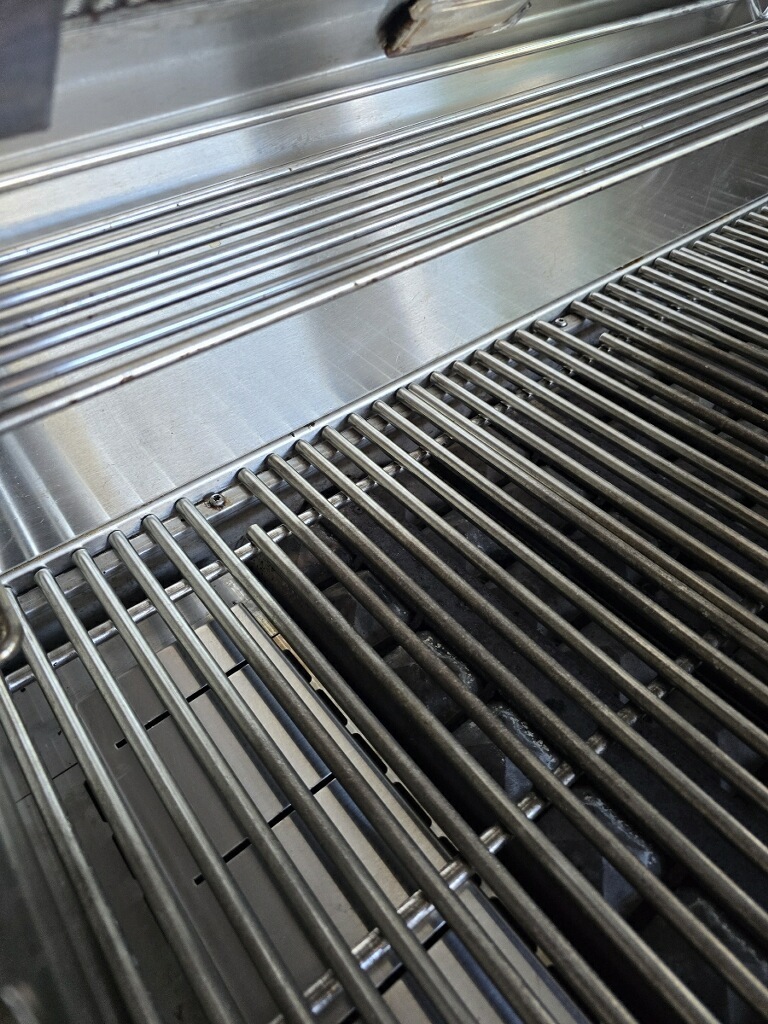
Pick stainless steel grill grates if you want the longest life with the least fuss. Pick porcelain-enameled cast iron if you care most about hard sear marks and heat retention. Bare cast iron sears best of all but rusts fast in North Texas humidity unless you season it after every cook. For most Dallas-Fort Worth backyards, solid stainless rod is the safest replacement.
Which grill grate material is best?
There is no single best grate. There’s a best grate for how you cook and how much maintenance you’ll actually do. Weber makes three types of cooking grate, and each one trades something away. According to Weber, porcelain-enameled cast iron grates typically retain heat better and longer than the other types, which is why they throw the boldest sear marks.
Here’s how the four materials we see on DFW grills actually compare in the field.
| Grate material | Heat retention | Rust risk in DFW | Typical lifespan | Best for |
|---|---|---|---|---|
| Solid stainless rod (304) | Good | Very low | 10+ years | Built-ins, low-maintenance owners |
| Porcelain-enameled cast iron | Excellent | Low until chipped | 4–8 years | Steak and sear marks |
| Bare cast iron | Excellent | High | Indefinite if seasoned | Hands-on cooks who season |
| Porcelain-enameled steel | Fair | Low until chipped | 2–4 years | Entry-level carts and budgets |
The materials that hold the most heat are also the ones that punish neglect the hardest. That tradeoff is the whole decision.
How thick should replacement grill grates be?
Rod thickness matters more than brand name, because a thicker rod holds heat through the cold spot a steak creates when it hits the metal. Premium built-in grates are noticeably heavier than the wire grates on a big-box cart, and you can feel the difference the moment you pick one up.
According to grillparts.com’s Blaze parts specification, Blaze’s standard cooking grate is built from solid stainless rod measuring 5/16 inch in diameter. That’s the benchmark to shop against. Thin hollow-tube grates cool off fast, bend under a cast iron skillet, and rarely survive a Texas summer of hard use.
When you’re shopping, check three numbers before you buy:
- Rod diameter. 5/16 inch or thicker is premium. Anything under 1/4 inch is entry-level.
- Solid or hollow. Solid rod holds heat. Hollow tube does not.
- Grade. 304 stainless resists corrosion better than 430. Cheaper grates are usually 430 or plated steel.
Why do porcelain grill grates chip?
Porcelain grates chip because something hard hit them: a metal scraper, a dropped tool, or cold water on a hot grate. The enamel is essentially glass fused to metal. Glass does not flex, and it does not forgive impact.
Weber’s own care guidance warns that sharp-edged tools can damage the porcelain enamel coating and open the door for corrosion. That’s the real cost of a chip. It isn’t cosmetic. Once the enamel breaks, the raw iron underneath is exposed, and in Dallas-Fort Worth humidity that spot starts rusting within weeks.
Our crews see the same failure over and over: a homeowner scrapes hard at burnt-on grease with a metal spatula edge, opens up three or four chips along one rod, and a year later the whole grate is pitted. If yours is already chipped, our guide to cleaning porcelain grates without chipping them covers the technique that stops it getting worse.
What should you clean grill grates with?
Not a metal wire bristle brush. Federal regulators spent 2026 pulling millions of them off the market. This is the single biggest change in grill care in years, and most homeowners still haven’t heard about it.
According to the U.S. Consumer Product Safety Commission, Weber recalled more than 3.2 million metal wire bristle grill brushes on February 26, 2026, after reports of consumers swallowing detached bristles and needing medical treatment. The CPSC announced separate recalls the same year covering over 10.2 million Nexgrill brushes sold at Home Depot and over 3.6 million Cuisinart brushes from Conair.
Use one of these instead:
- Nylon bristle brushes rated for cold cleaning only. They melt on a hot grate.
- Bristle-free coil or scraper tools. Safe on stainless, but keep the hard edge off porcelain.
- Wood grill scrapers that groove themselves to your rod spacing. Gentle on enamel.
- A balled-up piece of heavy foil held in tongs. Free, and it works.
Whatever you use, Weber’s care instructions call for preheating the grill on high for about 15 minutes before brushing, so the residue carbonizes and releases instead of smearing. For a deeper look at what performs, see our tested grill cleaner and tool roundup.
When should you replace grill grates instead of cleaning them?
Replace a grate when the metal itself is gone, not when it merely looks bad. Most grates that homeowners write off are perfectly restorable. A deep clean strips carbon back to bare metal and buys years.
Replace it when you see any of these:
- A rod has separated from the frame or snapped through.
- You can flake material off with a fingernail and it leaves a pit, not a stain.
- The grate flexes noticeably under a cast iron pan.
- Porcelain is chipped across multiple rods with orange rust blooming under the breaks.
- Bare cast iron has scaled into thick, layered rust that comes off in sheets rather than dust.
Everything short of that is a cleaning problem, not a replacement problem. Telling the two apart is the same judgment call covered in our guide to whether grill rust is cosmetic or structural. If you’re unsure, get eyes on it before you spend a few hundred dollars on new grates you didn’t need.
Do better grates actually improve the sear?
Grate mass improves the sear. Grate cleanliness improves it more. A heavy cast iron grate holds temperature when cold meat lands on it, so the crust forms instead of the surface steaming. That part is real physics.
But a thick layer of carbonized grease insulates the rod from your food. Upgrading to premium grates and leaving them caked is spending money on the wrong half of the problem. Clean first, judge the sear, then replace only if the metal is genuinely spent. We break down the full diagnosis in why your grill won’t sear.
What does this cost in Dallas-Fort Worth?
A professional grill deep clean starts at $239, which is usually less than a set of premium replacement grates. That’s why we tell people to clean before they shop. Grate sets for a built-in Blaze, Lynx, or Alfresco frequently run higher than the service call that would have saved them.
Our grill restoration and deep cleaning service takes the grates, flame tamers, and firebox down to bare metal. If the finish is the problem rather than the carbon, stainless steel grill restoration is the right call. For recurring upkeep, professional grill cleaning keeps grates from ever reaching the replace-it stage. Current rates are on our pricing page.
We work the whole Metroplex — Dallas, Fort Worth, Arlington, Plano, Frisco, Southlake, Grapevine, Keller, McKinney, Allen, Mansfield, and Colleyville. Full coverage is listed on our service areas page.
Frequently asked questions
Can you mix grate materials on the same grill?
Yes. Plenty of owners run a cast iron sear grate on one side and stainless on the other, and several manufacturers sell half-width sear grates specifically for this. Just confirm the replacement matches your grill’s grate channel dimensions, because rod length and frame width vary by model even within one brand.
Do stainless steel grill grates rust?
Stainless resists rust but is not immune. Surface discoloration and orange speckling usually come from carbon steel particles left behind by a wire brush, or from chlorides in hard water. That rust sits on top of the stainless rather than in it, and a proper deep clean removes it without damaging the metal underneath.
Are cast iron grates worth it in Texas humidity?
Only if you season them. Bare cast iron will develop surface rust in a matter of days on a Dallas-Fort Worth patio if it’s left wet and unoiled. Owners who wipe a thin coat of high smoke point oil on after each cook get excellent results, and our cast iron grate seasoning guide for DFW walks through the routine. Owners who don’t should buy stainless instead.
How long do grill grates last?
Solid stainless rod grates routinely go past ten years. Porcelain-enameled cast iron typically runs four to eight years before chipping forces replacement. Porcelain-enameled steel on entry-level carts often needs replacing in two to four. Cleaning habits move these numbers more than brand does.
Should you season new grill grates before the first cook?
Season bare cast iron, yes. Stainless and porcelain-enameled grates don’t need seasoning, though a light oil wipe helps food release. For any new grate, run the grill empty on high for about fifteen minutes first to burn off manufacturing oils before food touches the surface.
Is it safe to keep using a wire bristle grill brush?
The CPSC’s position is that consumers should stop using the recalled models immediately and get the free replacement. Millions of metal wire bristle brushes were recalled in 2026 across Weber, Nexgrill, and Cuisinart lines. Check your brush against the model numbers on the CPSC recall notices, then switch to a nylon or bristle-free tool.
Will professional cleaning save grates I thought were ruined?
Often, yes. Most grates that look destroyed are carrying years of carbonized grease rather than actual metal loss. Once that’s stripped, the rod underneath is frequently sound. The grates that can’t be saved are the ones with broken rods, deep pitting, or scaled rust that flakes away in sheets.
Get an honest answer before you buy new grates
We’d rather clean your grates than watch you buy a set you didn’t need. If you want a real look at what you have, book an appointment or call (817) 791-4606. Estimates are free.
Texas Grill Clean is part of 1st Choice Residential — veteran-owned, locally owned, licensed and insured, and serving Dallas-Fort Worth since 2009.