
 3302 Westgrove Drive Arlington, TX 76001


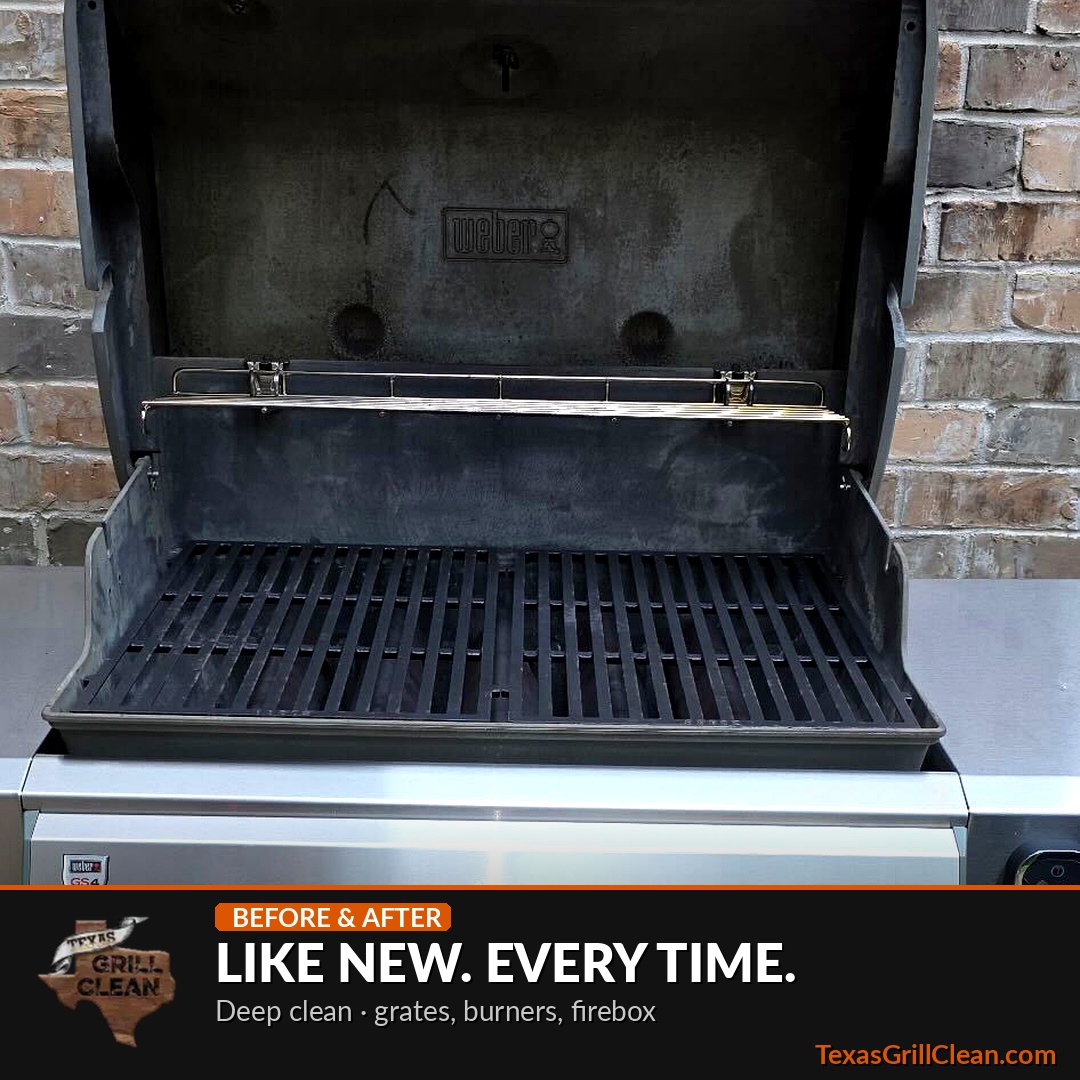
Clean porcelain grill grates with a nylon or soft-bristle brush and warm, soapy water. Never scrape them with metal tools, and never use steel wool. The porcelain coating is glass fused to metal. Once it chips, moisture reaches the steel or cast iron underneath and rust starts spreading where you can’t see it.
Porcelain-enameled grates are the most common grate type we see across Dallas–Fort Worth. They ship standard on the Weber Spirit and Genesis lines, most Char-Broil Performance models, Napoleon Rogue grills, Nexgrill, and nearly every Pit Boss. They’re also the grate type homeowners ruin fastest, because the cleaning habits that work on bare cast iron or solid stainless will wreck porcelain in one season.
How Do I Know If My Grates Are Porcelain-Coated?
Porcelain-coated grates have a smooth, glassy, usually black or dark gray finish, and a magnet still sticks to them. Bare cast iron looks dull and slightly rough. Solid stainless rods are silver and shiny. If your grates are dark with a slick sheen, like the surface of a cast iron skillet that’s been glazed, you’re looking at porcelain enamel over steel or cast iron. Your owner’s manual will confirm it. When our crew opens a grill in Grand Prairie or Mansfield, porcelain-enameled cast iron is what we find more often than anything else.
What’s the Right Way to Clean Porcelain Grill Grates?
The safe routine is a burn-off, a soft brush on the grates, and soapy water for anything baked on. Here’s the full sequence we use in the field:
- Burn off the residue. Run the grill on high with the lid closed for 10 to 15 minutes. Most stuck-on food turns to loose ash.
- Let the grates cool if you’re using nylon. Nylon bristles melt on hot metal. Brush cool grates only.
- Brush with the bars, not across them. Work along each rod so the bristles reach the sides without gouging the coating on the edges.
- Wash stubborn spots. Pull the grates and soak them in warm water with a squirt of plain dish soap for 20 to 30 minutes. Skip citrus-based degreasers; they can promote corrosion on any exposed metal.
- Rinse and dry completely. Water left sitting on a chipped spot is how rust gets its foothold, especially in North Texas humidity.
- Wipe with a light coat of cooking oil. Porcelain doesn’t need seasoning the way bare cast iron does, but a thin wipe of high-heat oil helps food release and adds a moisture barrier.
That’s it. No scrapers, no oven cleaner, no pressure washer. If the buildup is beyond what a soak will move, that’s a job for a professional deep clean, not a harder tool.
Why Do Porcelain Grates Chip and Rust?
Porcelain grates fail when something hard breaks the glass coating and exposes the metal core. The coating itself doesn’t rust. It can’t. But it’s brittle, like the enamel on a bathtub. The usual killers we see on DFW service calls are metal scrapers, dropped grates, a spatula edge used to chisel off stuck chicken, and thermal shock from spraying cold water on hot grates. Once there’s a chip, cast iron underneath starts oxidizing, and the rust creeps sideways under the coating and lifts more of it off. A grate that chipped in spring is often flaking by fall.
The other slow killer is trapped grease. Grease holds moisture against the grate between cookouts. If your grill sits under a cover through an August like this one, that damp, greasy pocket works on every chip 24 hours a day. We covered that whole mechanism in our post on whether grill covers cause rust.
Wire Brush or Nylon Brush? What the Manufacturers Actually Say
Manufacturers disagree on wire brushes, so the safe default is nylon on a cool grate. This surprises most homeowners: Weber and Char-Broil give different instructions for the same grate material.
According to Weber’s grate care guide, you should preheat the grill to 500–550°F and brush the grates with a stainless steel bristle brush before each cook, replacing the brush at least once a year and never using tools with sharp edges on the enamel. Char-Broil, on the other hand, sells nylon-bristle brushes specifically for its porcelain and ceramic-coated grates and warns against wire brushes on those surfaces.
| Grate type | Safe brush | Never use | Needs seasoning? |
|---|---|---|---|
| Porcelain-enameled (steel or cast iron core) | Nylon on cool grates; stainless bristles only if your manual allows it | Metal scrapers, steel wool, sharp-edged tools | No, light oil wipe only |
| Bare cast iron | Stiff brush or scraper | Long soaks in water | Yes, after every deep clean |
| Solid stainless steel | Stainless bristle brush or scraper | Steel wool that shreds and embeds | No |
Follow your own manual first, because the wrong tool can void a grate warranty. And whatever brush you use, check it for loose bristles before every cook. A swallowed wire bristle is an emergency-room injury, which is one reason our crew works with bristle-free tools and steam. We covered bare cast iron care separately in our cast iron grate restoration guide.
Can You Fix a Chipped Porcelain Grate?
No. Once the enamel chips, the grate can’t be recoated at home, and it should be watched or replaced. Porcelain enamel is fused to the metal in a furnace at the factory. There’s no paint or spray that rebuilds it, and “high-heat grill paint” has no business on a cooking surface. A small chip on the underside isn’t urgent. Keep the grate clean, dry, and lightly oiled and it can serve for a couple more seasons. Flaking on the cooking surface is different: those flakes end up in your food, and the exposed iron rusts fast. Replace the grate at that point. Most Weber, Napoleon, and Char-Broil replacement grates cost far less than the food you’ll ruin cooking on rusty flakes.
Does DFW Weather Make This Worse?
Yes. North Texas humidity swings and hard water both accelerate rust at every chip in the coating. Our sprinkler-heavy suburbs add mineral-loaded overspray that dries on grates and dulls the enamel. Grills in Grand Prairie, Arlington, and Mansfield backyards that sit near sprinkler lines show it worst. If your grates have white chalky spots on top of the grease, that’s hard water, and we wrote up the fix in our guide to removing hard water spots. A dry grate under a vented cover, wiped with oil, shrugs most of this off.
When Should You Call a Professional?
Call a pro when soaking and soft brushing won’t move the buildup, or when you can’t tell if the grates are chipped or just dirty. Years of carbonized grease on porcelain looks like black texture, and homeowners understandably attack it with scrapers. That’s how a salvageable grate becomes a ruined one. Our professional grill cleaning uses steam and non-abrasive methods that strip carbon without touching the enamel, and we inspect every grate for chips and flaking while the grill is apart. A full deep clean and restoration starts at $239, and you can see the rest of our rates on the pricing page. We serve the whole Metroplex, including Grand Prairie, and you can find your town on our service areas page.
Porcelain Grill Grate FAQ
Can I use a wire brush on porcelain grill grates?
Only if your grill’s manufacturer says so. Weber approves stainless bristle brushes on its porcelain-enameled grates, while Char-Broil recommends nylon bristles on its porcelain surfaces. The universal safe choice is a nylon brush used on cool grates. Never use a metal scraper or steel wool on any porcelain coating.
How do I get rust off porcelain grill grates?
Rust on a porcelain grate means the coating has already chipped, because the enamel itself can’t rust. Brush the rusted spot gently, wash and dry the grate, and wipe it with cooking oil to slow the spread. If rust or flaking reaches the cooking surface, replace the grate rather than trying to restore it.
Do porcelain grates need to be seasoned like cast iron?
No. The porcelain coating does the job seasoning does on bare cast iron, so there’s no need to build up baked-on oil layers. A thin wipe of high-heat cooking oil after cleaning still helps: it makes food release easier and adds a moisture barrier over any small chips you haven’t spotted yet.
How long do porcelain-coated grates last?
With soft brushes, regular cleaning, and dry storage, porcelain-enameled grates commonly last five to ten years. With metal scrapers and trapped grease, they can start flaking in a single season. The coating is the whole ballgame. Protect it and the grate lasts; chip it and the clock starts ticking.
Can I put porcelain grates in the dishwasher or a self-cleaning oven?
No to both. Dishwasher detergent is harsh on enamel and rusts any exposed metal at chips, and a self-cleaning oven cycle runs far hotter than the grate was designed for, which can crack the coating. Stick to warm soapy water, a soft brush, and a complete hand-dry.
What’s the best brush for porcelain grill grates?
A grit-infused nylon brush used on cool grates is the safest all-around pick, and it’s what Char-Broil sells for its own porcelain grates. If you own a Weber, its manual approves stainless bristle brushes on a preheated grate. Whichever you use, check for loose bristles before every cook and replace the brush yearly.
Is professional cleaning safe for porcelain grates?
Yes, when it’s done with steam and non-abrasive tools rather than blasting or heavy scraping. Ask any service how they handle coated grates before you book. Our crew steams porcelain grates clean and inspects them for chips and flaking, so you know whether your grates have another season in them.
Ready for Grates You’d Actually Eat Off?
If your porcelain grates are buried under carbon, or you’re just not sure what shape they’re in, we’ll handle it without hurting the coating. Book your grill cleaning online or call (817) 791-4606 for a free estimate. Texas Grill Clean is part of 1st Choice Residential, veteran-owned and serving Dallas–Fort Worth since 2009.