
 3302 Westgrove Drive Arlington, TX 76001


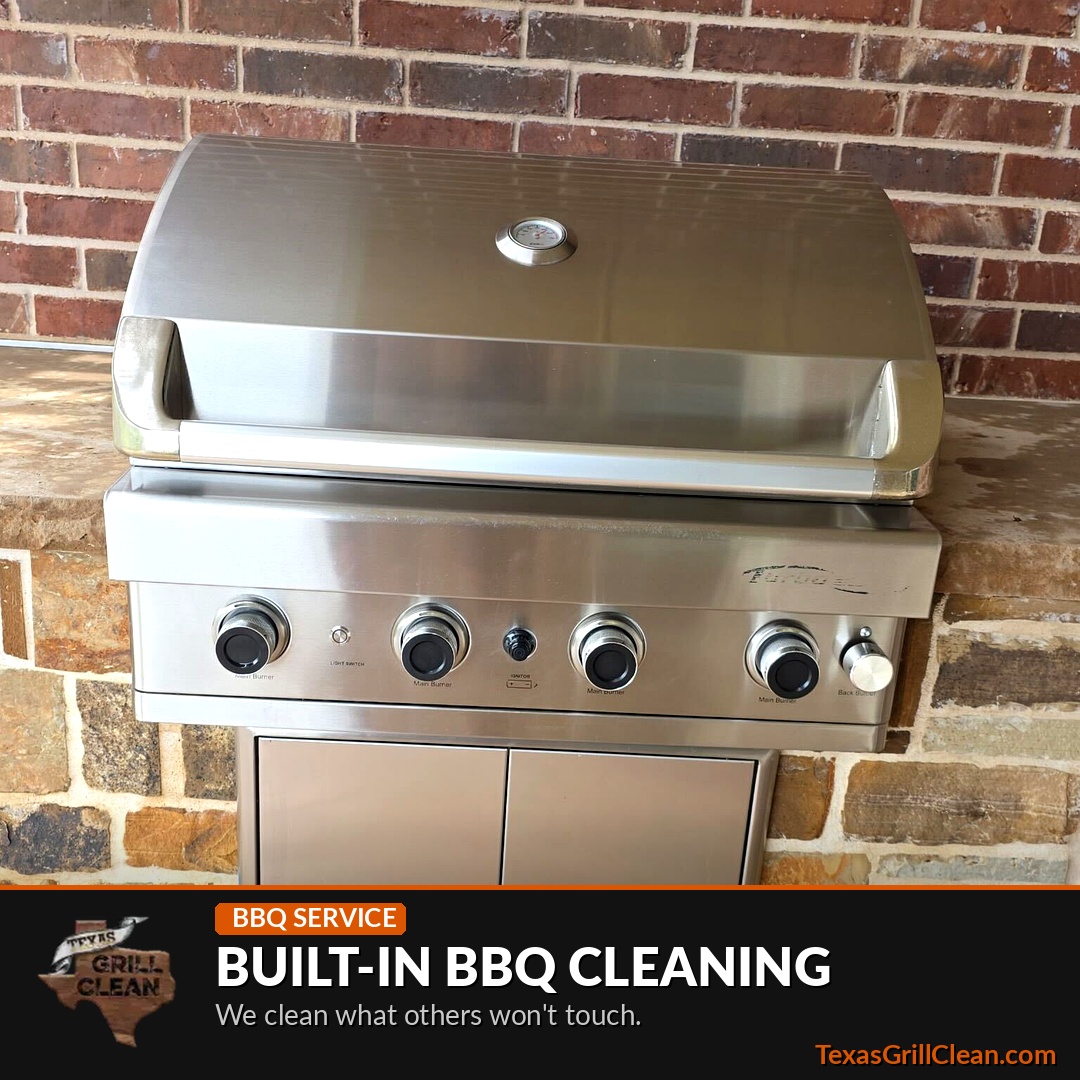
Replace a grill burner when the metal itself has failed. Cracks across the tube, split seams, holes rusted through, or ports that stay blocked after a full cleaning all mean the burner is done. If the burner is only crusted with grease and carbon, cleaning brings it back. Cleaning fixes buildup. It cannot fix burned-through steel.
This is the call our crew makes on almost every gas grill service in Dallas-Fort Worth. Most homeowners assume a weak, yellow, or uneven flame means they need new parts. Usually it doesn’t. But sometimes it does, and grilling on a burner that has split open is how a backyard cookout turns into a fire report.
Here is how to tell the difference on your own grill.
How can you tell a grill burner is worn out and not just dirty?
A dirty burner has blocked ports. A worn-out burner has missing metal. That is the whole test.
Grease drips into the burner ports and cooks into hard carbon. Spiders and mud daubers build nests in the venturi tubes. Rust flakes off the firebox and settles in the holes. All of that blocks gas flow, and all of it comes off with a brush, a port cleaner, and a proper teardown clean.
What does not come off is corrosion that has eaten through the wall of the tube. Once a burner perforates, gas escapes where it shouldn’t. You get flames rolling out the side or the back of the burner instead of even flame across the top. No amount of scrubbing puts that metal back.
What does a failed burner tube look like on inspection?
Pull the burner out and look for holes, cracks, and flame coming from the wrong place. These are the signs that mean replacement, not cleaning:
- A crack across the casting. Common on cast stainless and cast brass burners in built-in grills. It usually starts at a mounting point and runs sideways.
- A split seam. Tube burners are folded and welded. When the weld opens, you get a long flame slot instead of neat ports.
- Rust-through. Aluminized steel burners corrode from the inside out. The outside can look acceptable while the underside is paper thin. Press it with a screwdriver handle. If it caves, it’s finished.
- Ports that stay dark after cleaning. If a section of the burner won’t light after the ports have been cleared and the venturi is clean, the metal around those holes has eroded and the gas is escaping elsewhere.
- Flame at the venturi end. Fire burning back near the valve instead of on top of the tube is a burnout, not a dirt problem. Shut the grill down.
A yellow or lazy flame on its own is not proof of a bad burner. That is usually an air or debris issue, and we cover it in detail in what a yellow flame is telling you.
How long should gas grill burners last?
It depends entirely on what the burner is made of, and the manufacturers publish the numbers. According to Weber’s U.S. warranty, stainless steel burner tubes on GENESIS gas grills are warranted for ten years against rust-through or burn-through, with remaining parts covered for five years. According to the Blaze Grills warranty, the main burners, cooking grids, body, flame tamers, heat zone separators, warming rack, and control valves carry a lifetime warranty, while ignition, electronic, and lighting systems are covered for one year and the grill must be registered within thirty days.
That gap tells you something useful. A premium cast stainless burner in a Blaze or Coyote island is expected to outlive the homeowner. A thin aluminized tube in a big-box cart grill is a wear item.
| Burner type | Common on | How it usually fails | Cleanable? |
|---|---|---|---|
| Aluminized steel tube | Entry-level cart grills | Rusts through from the inside out | Yes, until the metal perforates |
| 304 stainless tube | Weber Genesis, mid-range and premium carts | Port erosion, split seam near the venturi | Yes, until the ports erode open |
| Cast stainless | Blaze, Coyote, Alfresco, many built-ins | Cracks across the casting, warping | Yes, until it cracks |
| Cast brass | Lynx and some luxury built-ins | Pitting, cracked casting | Yes, brass cleans up well |
| Ceramic infrared sear burner | Sear zones on premium grills | Cracked or crumbling ceramic panel | Brush gently only, never scrape |
How do you inspect your grill burners in about ten minutes?
Do it cold, with the gas off, and take the burner all the way out. You cannot judge a burner while it’s bolted in the firebox.
- Shut off the gas. Close the propane tank valve or the natural gas shutoff at the wall, then disconnect the regulator.
- Remove the grates and flame tamers. Set them aside. Note how the flame tamers or heat plates sit so they go back the same way.
- Pull the burners. Most tube burners have one cotter pin, screw, or clip at the back. Lift the rear, then slide the venturi off the valve orifice.
- Inspect the tube in daylight. Look down the length for cracks, splits, and soft rusted spots. Tap it over a trash can. If rust pours out of the inside, the wall is thinning.
- Check the venturi and spider screen. Webs and insect nests in the intake starve the burner of air and cause yellow flame and flashback. Clean the screen, don’t remove it.
- Clear the ports. Use a port cleaning tool or a paperclip on each hole, then brush the tube lengthwise so debris falls out rather than in.
- Reinstall and light test. Confirm the venturi is seated squarely over the orifice. Light one burner at a time and watch for even blue flame across every port.
If step seven still shows a dead section, dark ports, or fire coming from anywhere but the top of the tube, the burner needs replacing. If the flame is even, you had a cleaning problem and you just solved it. Our full walkthrough is in how to clean gas grill burners.
Why do grill burners fail faster in Dallas-Fort Worth?
Heat cycling and moisture do the damage here, not salt. A burner in Southlake or Frisco goes from ambient summer heat to 600 degrees and back again several times a week, then sits under a cover that traps humidity overnight. Steel that expands, contracts, and stays damp corrodes faster than steel that doesn’t.
Two more local factors show up constantly on our routes. Hard water in North Texas leaves mineral deposits that hold moisture against stainless. And built-in grills converted to natural gas run different orifice sizes, so a conversion done wrong loads the burner with an incorrect air-fuel mix and burns it out early.
On the Gulf Coast side of our service area, in Mobile and Baldwin County, salt air adds a fourth. Same inspection, faster clock.
Is it safe to keep grilling on a cracked burner?
No. Stop using it until the burner is replaced. A split burner puts open flame where the grill was never designed to have it, usually right beside the grease tray.
According to the National Fire Protection Association, gas grills were involved in an annual average of 9,235 home fires, including 4,662 structure fires and 4,573 outdoor fires. Leaks and breaks were a factor in roughly 6 percent of gas grill structure fires and 13 percent of outside gas grill fires.
That is the exact failure category a cracked burner falls into. It is also why we do a gas-system check on every service call rather than just scrubbing grates. More on the fire side in our grease fire prevention guide.
What does burner work cost compared with a deep clean?
A deep clean is a fixed price. Burner replacement depends on the part. A Texas Grill Clean grill deep clean starts at $239, and a large share of the “my burner is bad” calls we get are solved inside that service with no parts at all.
Burner parts are a different story. A tube burner for a common cart grill and a cast stainless burner for a built-in island are not in the same price range, and premium brands often want their own part number to keep the warranty intact. We quote parts after we’ve seen the grill. Current service pricing is on our pricing page, and estimates are free.
If your grill is older and you’re weighing parts against a new unit entirely, read repair or replace a built-in grill first. And if the symptom is heat on one side only, start with uneven heat diagnosis before you buy anything.
Frequently asked questions about replacing grill burners
Can you clean a rusted grill burner instead of replacing it?
Yes, if the rust is surface rust. Brush it off, clear the ports, and light test it. Replace the burner only when rust has eaten through the wall of the tube. Press a suspect spot with a screwdriver handle. If the metal flexes, dents, or opens up, the burner is past cleaning.
How much does it cost to replace grill burners?
It depends on the grill. A tube burner for a common cart grill and a cast stainless burner for a built-in island are in very different price ranges, and premium brands often require their own part numbers to keep a warranty valid. We quote parts only after inspecting the grill. Estimates are free.
Do I have to replace all the burners at once?
Not always, but usually it’s smart. Burners in the same grill have the same age, the same heat cycles, and the same corrosion exposure. If one has failed, the others are close behind. Replacing a single burner on a four-burner grill often means a second service call within a season.
Will a new burner fix uneven heat across my grill?
Sometimes. Uneven heat also comes from warped flame tamers, a blocked venturi, a partly closed valve, or a regulator stuck in bypass mode. Diagnose the whole gas path before buying a burner. Replacing good metal will not fix a low-pressure or airflow problem upstream of it.
How often should grill burners be inspected?
At least once a year, and again any time the flame pattern changes. In Dallas-Fort Worth we recommend spring, before heavy grilling season, because that’s when spider and mud dauber nests in the venturi tubes show up. A yearly inspection catches a thinning burner while it’s still a parts order, not a fire.
Are aftermarket grill burners as good as factory parts?
Some are close, many are thinner steel, and on premium grills an aftermarket part can void the warranty. Check your manufacturer’s warranty terms before ordering. On a lifetime-warranty burner like Blaze’s, going aftermarket means paying for a part the maker would have covered.
Get the burners checked before you buy parts
Most of the burners homeowners think are dead are just buried. We tear the grill down cold, clean the burners and venturis, check the gas system, and tell you straight whether you need parts or not. If you do, we quote it before we order it.
Book online at texasgrillclean.com/book-appointment or call (817) 791-4606. See what’s included in a grill restoration and deep cleaning, our professional grill cleaning service, and gas grill repair. We cover Southlake, Frisco, and the rest of the metroplex. Full list on our service areas page.
Texas Grill Clean is part of 1st Choice Residential, veteran-owned and serving Dallas-Fort Worth since 2009. Licensed and insured. Free estimates. 3302 Westgrove Drive, Arlington, TX 76001.