
 3302 Westgrove Drive Arlington, TX 76001


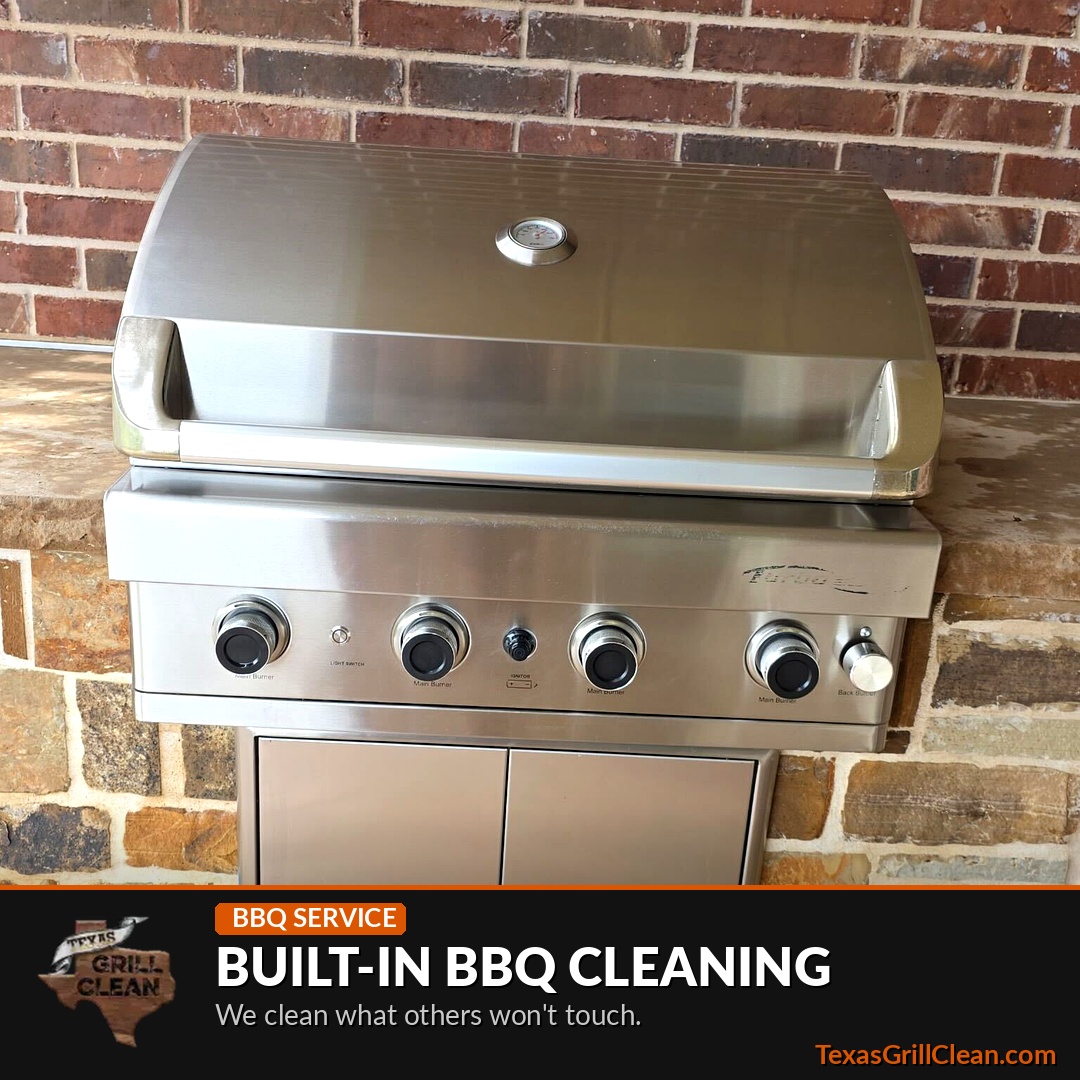
To clean a Bull grill, burn it off on high for no more than five minutes after cooking, let everything cool, then pull the flame tamers and the cast stainless burners and wash them in warm, soapy water. Wire-brush each burner, clear any blocked port with a stiff wire, and empty the grease tray. Never line the firebox with foil.
That last sentence is the one that gets people. Bull builds a good grill. Bull owners in McKinney, Frisco, and Prosper tend to have them dropped into a stone island in a three-year-old backyard, and the island is the reason the grill never gets cleaned right. You can’t see the bottom of the firebox from a standing position, so nobody looks.
Here is what Bull’s own paperwork says, what our crew finds when we open one of these up, and where the line sits between a Saturday job and a service call.
What does Bull actually tell owners to do?
Bull’s owner’s manual asks for a monthly burner inspection and an annual teardown clean of the whole grill housing. Not seasonal. Monthly.
According to the Bull Brahma 38-inch owner’s manual, the monthly check is for cracks, holes, and corrosion openings in the burner tubes, and the manual is direct about what to do if you find one: order a new burner. The same manual sets the post-cook burn-off at no more than five minutes on high, and calls for six inches of clearance behind the grill for ventilation.
The annual clean is the part almost nobody does. Shut the gas off at the source, pull the grates, flame tamers, heat shields, and burners, cover the valve orifices, and brush out the inside and bottom of the firebox with a stiff wire brush before washing it down.
How do you clean Bull’s cast stainless steel burners?
You clean a Bull burner from the outside in and the inside out, because grease blocks the ports and spiders block the tubes, and those are two different problems.
Bull ships its cast stainless burners with cotter pins holding them in place for shipping. Pull the pin, lift the burner clear of the retaining hole, and slide it off the gas valve tip. Here is the sequence the manual lays out:
- Shut off the gas at the source before you touch anything.
- Remove the cotter pin and lift each burner free of the valve orifice.
- Wire-brush the entire outer surface of the burner to take off food residue, dirt, and loose corrosion.
- Bend a stiff wire into a small hook and run it through each burner tube several times.
- Follow with a narrow bottlebrush on a flexible handle, running it the full length of the tube.
- Clear any clogged port with a stiff wire. An opened paper clip works.
- Inspect the whole burner for openings caused by corrosion, then reinstall.
- Confirm the valve orifice sits inside the burner tube before you light it.
Step eight is the safety step. Bull’s manual carries an explicit warning: if the valve orifices don’t seat inside the burner tubes, lighting the burners can cause an explosion or fire. Check it with a flashlight. Don’t assume.
The spider problem is real in North Texas. Mud daubers and orb weavers build inside venturi tubes during the months a grill sits idle, and a plugged venturi starves the burner of air. That shows up as a yellow, lazy flame or a burner that only lights halfway down. We wrote the full diagnosis in The Spider in Your Grill.
How do you clean Bull flame tamers, heat shields, and grates?
Soap, warm water, and a wire brush for burned-on residue. Dry them completely before they go back in.
Bull stacks two layers under the grates: stainless heat shields on the lowest ledge, and flame tamers on the ledge above the burners. Both collect drippings. Both bake that grease into carbon if they’re left alone.
The manual says washing after every cook isn’t necessary, and that’s fair. But periodically means periodically, not never. A flame tamer carrying a quarter-inch of hardened grease is the most common flare-up source we find in a Bull. If yours is flaring, start there before you blame the meat. More on that in Why Does My Grill Flare Up So Much?
Cooking grates get mild soap and warm water once cool. A vegetable brush or washcloth is enough on clean grates. Carbon that resists a brush needs a scraper, not more scrubbing.
What should you never do to a Bull grill?
Never line the bottom of the grill housing with foil, sand, or any grease-absorbent material. Bull puts this in capital letters in its own manual, and the reason is simple: grease can’t reach the grease collector, so it pools where it can catch fire.
Three more that cost Bull owners money:
- Steel wool and scouring pads on the stainless. Bull’s manual is clear that stainless steel is not rust-proof. Scratching the surface opens the door to corrosion. Wipe with the grain, using a cleaner made for stainless.
- Pressure washing. Water driven into burner tubes, orifices, and the igniter module causes failures that show up weeks later. We covered the damage pattern in Can You Pressure Wash a Grill?
- Letting the grease tray fill. Bull sells tray liners for a reason. Empty it and wipe it down on a schedule, not when you notice it.
Pool chemicals matter too. Bull’s manual singles out chlorine, bromine, and landscape fertilizers as corrosive to stainless, and notes that heat and humidity intensify it. A Bull sitting eight feet from a pool in a Frisco backyard is in a harsher environment than the same grill in a garage in Ohio.
Does cleaning a Bull grill affect the warranty?
Cleaning correctly protects it. Damage from improper cleaning is not covered.
Bull’s limited warranty runs to the original purchaser at the original delivery site and is void for commercial or rental use. Coverage by part, per Bull’s published warranty policy:
| Component | Coverage |
|---|---|
| Cast stainless steel burners | Lifetime |
| Insert assembly and grates | Lifetime |
| Welded stainless steel burners | 5 years |
| Porcelain coated burners | 3 years |
| Manifold, flame tamers, heat shields, warming rack | 3 years |
| Lid, control panel, grease tray, valves, regulator, knobs, lighting | 1 year |
Read that table next to the burner-cleaning steps above and the logic gets obvious. The burners carry lifetime coverage. The parts that fail from neglected grease, the valves and the lighting system, carry one year. Cleaning is what keeps the one-year parts out of the conversation.
How often should a Bull grill be cleaned in Dallas-Fort Worth?
Inspect the burners monthly, wipe the stainless after every few cooks, and do a full teardown clean once or twice a year.
North Texas adds two problems to that schedule. Spring pollen bonds to warm grease and turns into a film that ordinary wiping won’t lift. And summer heat runs the polymerization of grease faster, so the soft residue you could have wiped off in May is a hard carbon shell by August.
The safety math backs up the frequency. According to NFPA research on home grill fires, U.S. fire departments respond to an annual average of 12,141 home fires involving grills, and failure to clean the grill is the leading contributing factor, behind roughly one in five of those fires.
When is it worth paying for a professional Bull grill cleaning?
When the grill is built into an island, when the carbon has hardened past what a brush moves, or when you’d rather not pull five burners off their valve orifices yourself.
Built-in Bulls are where our crew spends most of its time. The island cavity underneath collects debris nobody sees, and the access door is often the first place we find a problem. A cart Bull you can wheel out and work on from three sides. An island Bull you work on kneeling, in the dark, with a light.
Our grill restoration and deep cleaning service starts at $239 and covers the full teardown: grates, flame tamers, heat shields, burners, firebox, grease tray, and the stainless exterior. Standard professional grill cleaning is the lighter version for grills kept on a schedule. Current rates are on the pricing page, and we service McKinney along with the rest of the Metroplex.
Frequently asked questions about cleaning a Bull grill
Can you use oven cleaner on a Bull grill?
No. Oven cleaner is lye, and it attacks aluminum, chrome, and painted panels while stripping seasoning off cast iron. Bull calls for mild detergent and warm water on grates, flame tamers, and heat shields, and a non-abrasive stainless cleaner on exterior panels. Lye-based cleaners also damage the protective layer that keeps Bull stainless from corroding.
How do you clean Bull stainless steel without scratching it?
Wipe with the grain using a soft cloth and a cleaner made for stainless steel. Skip steel wool, scouring pads, and abrasive powders. Bull states plainly that its stainless is not rust-proof, and scratches expose bare metal to moisture. In DFW, add pool chemicals and fertilizer overspray to the list of things that accelerate corrosion on a scratched panel.
Why is my Bull grill only getting hot on one side?
Uneven heat on a Bull almost always means gas delivery, not a failed grill. Clogged burner ports, a spider web in the venturi tube, carbon-caked flame tamers, and a propane regulator stuck in bypass are the four usual causes. Clean the burners and tamers first. If the cold side stays cold after a full cleaning, inspect the burner for corrosion holes.
How often should you empty a Bull grease tray?
Empty it every two or three cooks, and always before it reaches half full. After a high-fat cook like burgers or ribeyes, empty it the same day. Bull sells grease tray liners to make the job faster. A full tray is a fire hazard and it also backs grease up into the firebox floor, where it hardens into carbon.
Can you burn off a Bull grill to clean it?
Yes, but only briefly. Bull’s manual says to run the grill on high for no more than five minutes after cooking to burn off excess grease and food residue. Longer burn-offs at full heat stress the firebox and warp flame tamers over time. A burn-off loosens residue. It does not replace pulling the parts and washing them.
Do Bull burners have a lifetime warranty?
Bull’s cast stainless steel burners carry a lifetime warranty, along with the insert assembly and grates. Welded stainless burners are covered five years and porcelain coated burners three years. The warranty extends only to the original purchaser at the original delivery site, and it is void for commercial or rental use. Damage from improper cleaning is not covered.
Should a built-in Bull grill be cleaned differently than a cart model?
The grill head cleaning is the same. What differs is the island. A built-in sits in an enclosure that collects debris, and that cavity needs to be opened, emptied, and checked for gas fitting damage. Bull also requires ventilation openings in a sealed island. Blocked vents give a slow gas leak nowhere to go.
Book a Bull grill cleaning in DFW
If the flame tamers are caked, the burners look pitted, or you just don’t want to pull five cast stainless burners off their orifices, we’ll handle it. Book an appointment online or call (817) 791-4606. Free estimates, licensed and insured.
Texas Grill Clean is part of 1st Choice Residential, veteran-owned and locally owned rather than a franchise, serving Dallas-Fort Worth since 2009. 3302 Westgrove Drive, Arlington, TX 76001. Questions by email: jeff@texasgrillclean.com. See our full service areas.