
 3302 Westgrove Drive Arlington, TX 76001


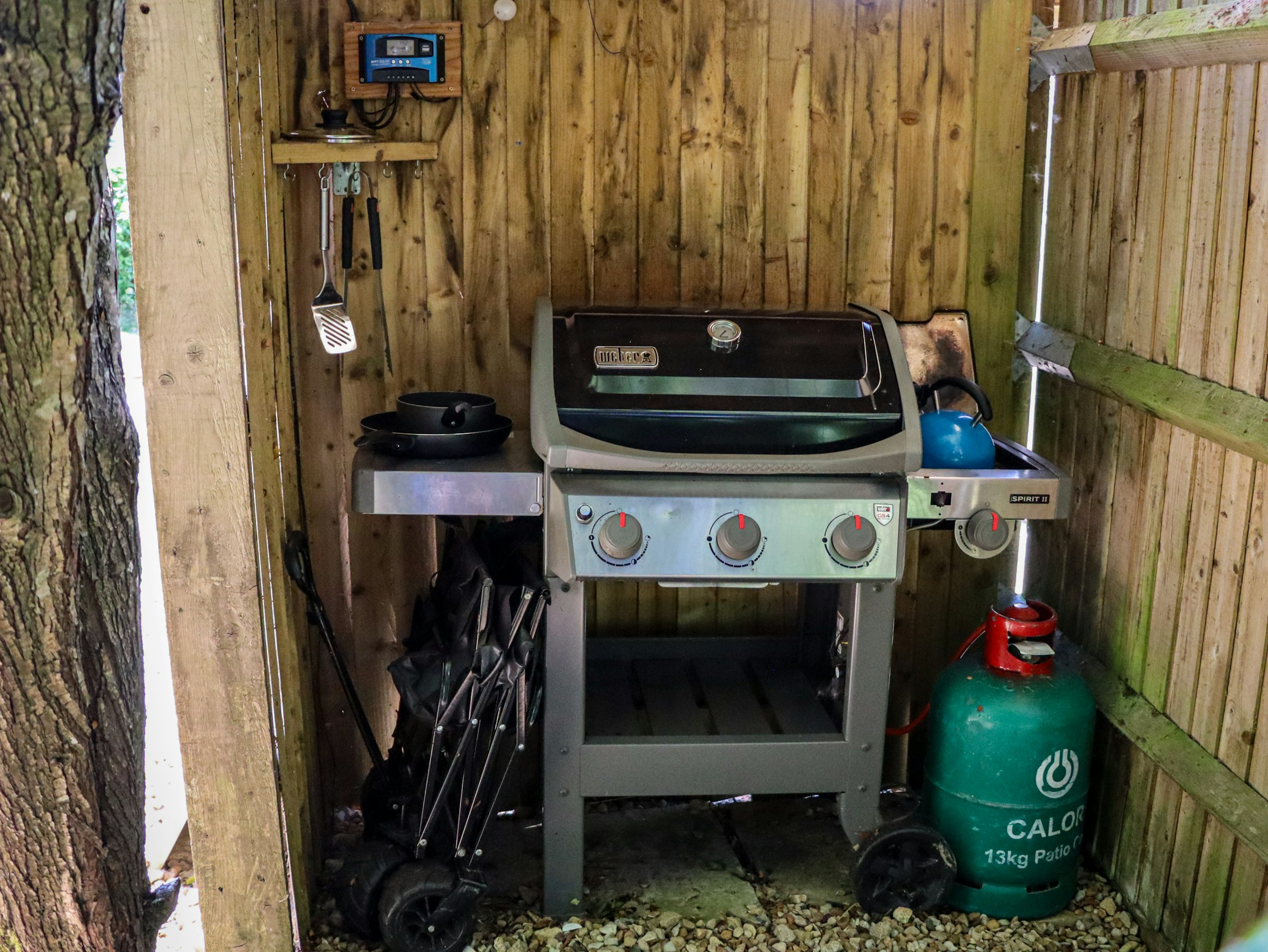
Replace your grill’s propane hose and regulator about every five years, and sooner if the hose is cracked, stiff, sticky, or cut. Weber sets that five-year interval in its own service guidance. In Dallas-Fort Worth, sun and heat age rubber faster than the calendar suggests, so give the hose a look before every cook.
How often should you replace a grill hose and regulator?
Every five years is the working interval for a propane grill, with a quick visual inspection before each use. That number is not a guess. According to Weber’s service guidance, the hose and regulator should be replaced every fifth year, and Weber notes that UV exposure and weather shorten the life of the hose.
Built-in brands say the same thing in different words. According to the Blaze Professional grill manual, owners should inspect the gas supply hose for cracks, cuts, or excessive wear before each use and replace it if needed. Blaze also states that only the factory-supplied hose and regulator may be used.
So the answer has two halves. Five years is the replacement clock. Every cook is the inspection clock.
What is the difference between the hose and the regulator?
| Part | What it does | How it fails | When to replace |
|---|---|---|---|
| Hose | Carries propane to the manifold | Cracking, chalking, splits at flex points, rodent chewing | Any visible damage, or five years |
| Regulator | Drops tank pressure to burner pressure | Diaphragm fatigue, stuck bypass, vent corrosion | With the hose, or if it will not reset |
| QCC1 coupling | Seals the hose to the tank valve | Torn O-ring, cross-threaded nut, grit on the seal | Comes with the hose assembly |
| Tank valve | Opens and closes flow at the cylinder | Seized handwheel, failed seat, expired date stamp | Exchange the cylinder |
On almost every cart grill, the hose and regulator come as one sealed assembly. You buy the kit for your model and swap the whole thing.
Why do propane hoses fail faster in Dallas-Fort Worth?
Heat and ultraviolet light are what kill a grill hose, and North Texas delivers both. The outer jacket is rubber. On a west-facing patio in Grand Prairie through a run of 100-degree afternoons, that rubber loses its plasticizers, goes chalky, and stiffens through.
Here is what the crew sees on service calls. A hose that looks fine coiled behind the tank shows hairline splits the moment you straighten it. The damage concentrates at flex points: right behind the QCC1 nut, and where the hose turns up into the cart.
Two other things shorten hose life, and neither is weather. Grease runs down from an overflowing drip tray and softens the jacket. Pests do the rest: mud daubers pack venturi tubes, rodents chew hose, and a grill that sits untouched from Thanksgiving to Memorial Day is an attractive place to move into.
What does a failing regulator actually do?
A failing regulator usually does not leak. It starves the grill. The symptoms look like a dirty grill, which is why it gets misdiagnosed constantly: low lazy flames, a grill that stalls around 300 degrees, flames that die when the lid comes down.
Before you condemn a regulator, rule out bypass mode. Bypass is a safety state, not a failure, and it resets in about two minutes. We walked through the procedure in the bypass mode fix. If full flame comes back, the regulator is fine. If it will not recover after two clean attempts, and the burner ports and venturi tubes are clear, you have a real failure.
How do you leak-test a grill hose and regulator?
Brush a fifty-fifty mix of liquid dish soap and water onto every joint with the gas turned on, and watch for bubbles. According to the U.S. Consumer Product Safety Commission, the solution should be one part water to one part liquid detergent, applied at the connection points, and bubbles mean there is a leak.
- Mix equal parts liquid dish soap and water in a cup. A brush works better than a spray bottle.
- Check that every burner knob is off. Then open the tank valve all the way.
- Brush the solution onto the tank valve connection, the full length of the hose, both ends of the regulator, and the fitting where the hose meets the grill.
- Watch for 30 seconds. Growing bubbles or a foam cluster means gas is escaping there.
- If you find a leak, close the tank valve, tighten the connection, and retest.
- If it still bubbles, the assembly is done. Do not light the grill. Replace the hose and regulator first.
Never use a flame to hunt for a leak. Run this test at the start of grilling season and every time you reconnect a cylinder.
How dangerous is a leaking grill hose, really?
Leaks and breaks rank among the leading causes of home grill fires, and gas grills account for the overwhelming majority of those fires. According to the NFPA Home Grill Fires report, U.S. fire departments responded to an average of 10,600 home fires involving grills per year from 2014 through 2018, causing an average of 10 deaths, 160 injuries, and $149 million in direct property damage annually.
The same report found that five of every six grills involved, 8,900 or 84 percent, were fueled by gas. NFPA names failure to clean and leaks or breaks among the leading contributing factors, and notes both show up more often in gas grill fires than in charcoal ones.
That is the whole case for a soap test and a five-year part. If you smell propane, stop and read how to track down a propane leak safely before you touch the igniter.
Can you replace a grill hose and regulator yourself?
On a cart-style propane grill, yes. On a built-in natural gas grill, no. A cart grill uses a self-contained kit with a QCC1 coupling on one end. Buy the kit that matches your model, thread it on, leak-test it, and you are done in fifteen minutes.
Built-ins are a different job. A natural gas grill in a masonry island ties into the house line through a shutoff, a flex connector, and a manifold with orifices sized for that fuel. Blaze states plainly that gas connections should be made by a qualified technician in accordance with local codes. Put the wrong pressure into a manifold and you get flames where flames do not belong.
If your built-in is acting up, that is what our gas grill repair service is for. We work built-ins across Grand Prairie, Arlington, Mansfield, and the rest of the Metroplex.
What does this have to do with grill cleaning?
Grease is what shortens hose life on most of the grills we open up. Every professional grill cleaning includes a look at the gas train, because the tech already has the cart open and the grease out of the way. Deep cleans start at $239, and full pricing is on the pricing page. If your tank is also getting up there in years, the collar stamp tells you when it expires.
Frequently asked questions
Does a natural gas grill have a regulator too?
Yes. A natural gas grill has a regulator, but it works at much lower pressure than a propane regulator and it is matched to the appliance. You cannot move a propane regulator onto a natural gas grill or the reverse. The orifices are sized differently as well, which is why a real fuel conversion requires a manufacturer kit and a qualified installer.
Can I use any hose and regulator kit that fits my tank?
No. Weber and Blaze both state that only the hose and regulator specified for that grill should be used. A universal kit may thread onto the tank correctly and still deliver the wrong pressure or flow rate to your burners. Buy the assembly listed for your exact model number, which is usually printed on a plate inside the cart door.
How do I know if my hose is too old without a date on it?
Straighten the hose and bend it into a tight loop. A healthy hose stays flexible and springs back. An aged one feels stiff, shows a chalky grey film, or opens fine cracks along the outside of the bend. Any cracking, any gouge, any sticky patch means replace it now rather than waiting for the five-year mark.
Why does my brand-new hose still give me low flames?
Most likely the regulator went into bypass during installation. Turn every burner knob off, close the tank valve, disconnect the regulator, wait a full minute, reconnect, open the tank valve slowly, then light the grill. If flames are still low after two attempts, the problem is downstream: clogged burner ports, a spider web in a venturi tube, or a grease-choked firebox.
Does replacing the hose and regulator affect my grill warranty?
Using the manufacturer replacement assembly protects your warranty. An off-brand kit can void coverage on gas components, and on a built-in, an improper gas line connection can void coverage entirely. Keep the receipt for the part. If a qualified technician does the work, keep that invoice with your grill records as well.
Get the gas train checked while the cart is open
A hose is a five-year part hiding behind a propane tank, and nobody thinks about it until the grill will not light. If yours has been in the Texas sun for more than a few seasons, run the soap test this weekend.
Want it handled instead? Book an appointment or call (817) 791-4606. Texas Grill Clean is part of 1st Choice Residential, veteran-owned and serving Dallas-Fort Worth since 2009.