
 3302 Westgrove Drive Arlington, TX 76001


A used grill is worth buying when the firebox is solid, the burner tubes are intact, and replacement parts are still made for that model. It is not worth buying when the box has rusted through, the burners are split, or the brand is gone. Warranties do not transfer. Budget for a deep clean and a leak test before your first cook.
Every spring and fall, our crew gets called out to a house in McKinney or Allen where somebody just bought a grill off Marketplace for $300. Sometimes it’s a steal. A Lynx or a Coyote that needed nothing but cleaning and one igniter. Other times the seller power-washed the outside, and the inside was a rusted shell with a cracked manifold. The difference is almost always visible in about ten minutes, if you know where to look.
Here’s what to check, in order.
Is a used grill actually worth buying?
Yes, if the two expensive parts are healthy: the firebox and the burners. Everything else on a grill is a wear item. Grates, flame tamers, igniters, knobs, hoses, and regulators are all replaceable and relatively cheap. The cookbox is not. On a welded stainless box, that’s most of the grill’s value. If the box is sound and the brand still sells parts, a $400 used grill can outlive a $900 new one.
The economics flip fast on cart-style big-box grills. Those are usually painted steel or thin aluminized sheet, and once the bottom pan rusts through, there’s nothing to restore. We covered the build-quality tiers in detail in How Long Does a Gas Grill Last?
What should you check before you buy a used grill?
Run these twelve checks in this order, and stop the moment you hit a deal-breaker. Bring a flashlight and a pair of gloves. Ask the seller to pull the grates and flame tamers out while you watch.
- Lift the grates and look at the firebox floor. Surface rust is fine. Flaking that leaves holes, or a bottom pan you can push a finger through, is not.
- Inspect the burner tubes. Look for splits along the top seam, ports rusted into one long slot, or burn-through near the venturi end. Split tubes mean every burner gets replaced.
- Check the venturi openings. These are the open ends where the burner meets the valve. Spider webs and mud dauber nests here are the most common no-start cause in North Texas. See the spider problem.
- Look at the flame tamers or briquette trays. Warped is normal. Missing is a parts hunt.
- Test every knob. Each valve should turn smoothly from high to low with a click. A frozen or gritty knob means a seized valve, and valves are sold as a manifold assembly on most brands.
- Fire it up before you pay. Insist on this. All burners lit, lid open, and let it run five minutes. You want steady blue flame across every port.
- Watch the flame color. Lazy yellow flame that doesn’t settle down points to a blockage or a bad air shutter setting.
- Close the lid and check the temperature climb. A healthy full-size gas grill should pass 500°F within 10 to 15 minutes on high.
- Check the hose and regulator. Cracked rubber, a stiff hose, or a missing date stamp means replace it. That’s a cheap part and a non-negotiable one.
- Inspect the propane tank if one comes with it. Read the collar stamp, not the paint.
- Find the model and serial number. Usually on a plate behind the control panel or inside the cart door. Without it, you cannot order parts or check recalls.
- Look underneath and behind. The back panel and the cart legs rust first. On built-ins, check the bottom of the box where it sits in the island cutout.
Does a grill warranty transfer to the second owner?
No. On nearly every major brand, the warranty covers the original purchaser only and does not follow the grill to a new owner. According to Weber’s published warranty terms, coverage is extended to the original purchaser and is not transferable to subsequent owners. Blaze, Lynx, DCS, and Coyote all take the same position in their own warranty language.
That matters more than most buyers think. A five-year-old Blaze with a lifetime-warranty burner set is only worth what the used market says it’s worth, because you’ll be paying retail for that burner if it fails. Price the grill as if it has zero coverage, because it does.
Which used grills are worth buying, and which aren’t?
| What you see | What it actually is | Deal-breaker? |
|---|---|---|
| Orange surface rust on grates and flame tamers | Normal oxidation on cast iron or steel components | No. Restorable or cheap to replace. |
| Rust flaking off the firebox floor in sheets | Structural corrosion through the cookbox | Yes. Walk away. |
| Black flaking on the inside of the lid | Carbonized grease, not paint | No. Cleans off. |
| Split or slotted burner tubes | Burner set at end of life | Only if parts are discontinued. |
| Knob that won’t turn or feels gritty | Seized gas valve | Usually yes on off-brands. Manifold parts are hard to source. |
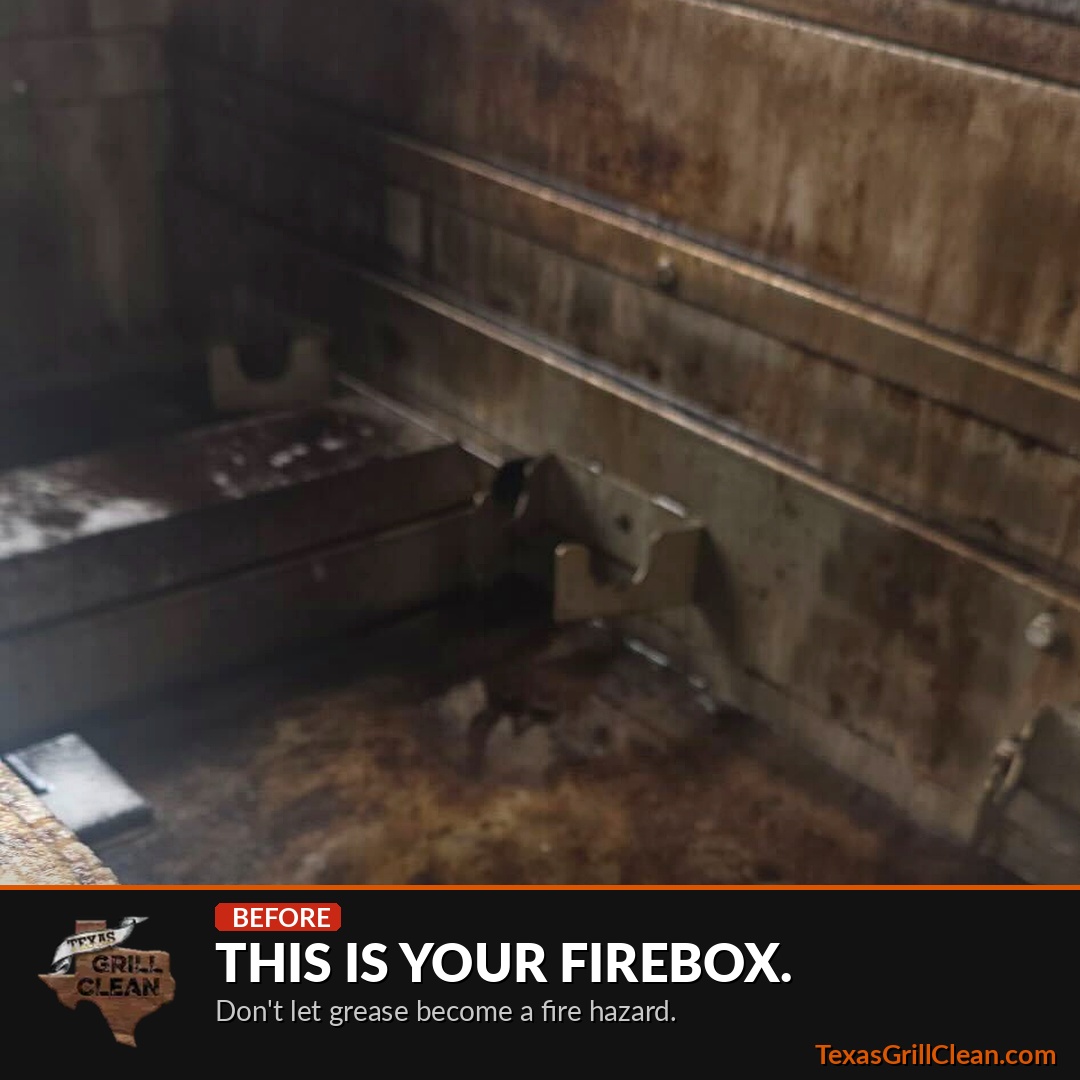
| Thick grease in the bottom of the box | Deferred maintenance, plus a real fire risk | No, but price it in. This is a deep clean. |
| No model or serial plate | Unidentifiable model | Yes on anything you’ll need parts for. |
| Dented lid or hail pocks, grill runs fine | Cosmetic storm damage | No. Negotiate on it. |
Not sure which side of the line your rust falls on? We wrote a whole diagnostic on it: Is Your Grill’s Rust Cosmetic or Structural?
Is the propane tank that comes with it even legal to refill?
A DOT propane cylinder is legally fillable for 12 years from its manufacture date, and after that it must be requalified before anyone can refill it. According to 49 CFR 180.209, requalification by the visual inspection method extends that by five years at a time. The date is stamped into the collar as a month and year.
Plenty of sellers throw in an expired tank as a bonus. It’s not a bonus. Exchange locations will take it, but no one will refill it. Full details in how to read the date on your grill tank.
How do you check whether a used grill has been recalled?
Search the model number at CPSC.gov/Recalls before you buy. The Consumer Product Safety Commission maintains a searchable recall database, and gas grills and grill accessories show up on it regularly. Recall remedies usually stay available to whoever owns the product, so a recalled grill isn’t automatically worthless. But you need to know before you cook on it.
Why does a used grill need a deep clean before the first cook?
Because old grease is the single biggest fire factor on gas grills. According to the National Fire Protection Association, gas grills are involved in an average of 9,235 home fires per year, and failure to clean the grill is the leading contributing factor in gas grill structure fires at 24%.
You have no idea when that grill was last cleaned. The seller doesn’t either, most of the time. A previous owner’s grease load sitting in the bottom of a box, plus a hot first cook on high, is exactly the setup that produces a grease fire on somebody’s patio in Frisco or Plano.
A full grill restoration and deep clean starts at $239. That includes pulling the grates, tamers, and burners, degreasing the box, and putting eyes on every part we just told you to inspect. If something’s wrong, you’ll know before you’re cooking for company. If a burner or valve needs to come out, that’s gas grill repair work, and we’ll quote it before we touch it.
Frequently asked questions
Is it worth buying a used gas grill?
It is worth it when the firebox is structurally sound, the burner tubes are intact, and the manufacturer still sells replacement parts. Premium built-ins from Lynx, Blaze, Coyote, DCS, and Alfresco hold up well and are worth buying used. Thin cart-style grills from big-box brands usually are not, because the cookbox is the first thing to fail.
Does a grill warranty transfer to the new owner?
No. Major manufacturers extend warranty coverage to the original purchaser only, and that coverage does not transfer to a second owner. Weber states this directly in its published warranty terms, and the premium built-in brands use the same language. Assume any used grill you buy has zero warranty, and set your price accordingly.
Can you still get parts for an old grill?
It depends entirely on the brand. Weber, Blaze, Lynx, DCS, and Coyote support models for many years and publish parts diagrams by serial number. Discontinued store brands often have no parts channel at all within a few years. Find the model and serial plate before you buy, then search that number for burners and valves.
How do you know if a used grill is safe to use?
Run it before you pay. All burners should light within a few seconds and hold a steady blue flame. The hose should be flexible with no cracks, the regulator should be intact, and no gas smell should be present anywhere near the connections. After purchase, have it deep cleaned and leak tested before the first real cook.
Should you buy a used built-in grill?
Often yes, because built-in heads are usually welded stainless and hold their value. The catch is fit. A used head has to match your island cutout in width, depth, and height, and those dimensions vary by brand. Measure your opening first, then shop. Removing and reinstalling a head is also heavier work than it looks.
Is it cheaper to fix a used grill or buy new?
Fixing is usually cheaper when the cookbox is sound, since burners, grates, igniters, and hoses are all serviceable parts. Replacing makes more sense once the box itself has corroded through, because that failure cannot be repaired economically. The dividing line is the box, not the age.
Buying a used grill in DFW? Let us look at it first.
We service grills across Dallas-Fort Worth, including McKinney, Allen, Frisco, Plano, Southlake, Arlington, and Grand Prairie. If you just bought something off Marketplace and you want a real set of eyes on it before you fire it up, that’s what we do all day.
Book an appointment online or call (817) 791-4606. See what’s included and what it costs on our pricing page.
Texas Grill Clean is part of 1st Choice Residential, veteran-owned and serving Dallas-Fort Worth since 2009. Licensed and insured. Free estimates.