
 3302 Westgrove Drive Arlington, TX 76001


Yes, you can cook a turkey on a gas grill. Thaw it completely, skip the stuffing, turn off the burner under the bird, and roast it in a pan over indirect heat at 325°F to 350°F with the lid closed. Plan on 15 to 18 minutes per pound, and pull it when a food thermometer reads 165°F in the thigh, wing, and breast.
Quick answer:
- Clean the grill first. Old grease plus a three-hour cook equals flare-ups.
- Indirect heat only: burner off under the turkey, outside burners on.
- No stuffing in the bird. USDA says it can’t reach 165°F in time.
- Done at 165°F in three spots, checked with a food thermometer.
Here’s why DFW families do it: the oven is busy with the green bean casserole, two pies, and the rolls Aunt Linda swore she’d bring. Moving the turkey outside frees up the kitchen and gives the family grill master a job that keeps them out of the way. And a golden, smoky bird coming off the grill in front of the whole family? That’s the kind of thing the cousins talk about until next year. The only thing that should get roasted this Thanksgiving is the turkey. And maybe Uncle Gary’s dad jokes.
Can you cook a turkey on a gas grill?
Yes, and the USDA spells out how. Its turkey cooking guide says a whole turkey cooks by indirect heat in a covered gas or charcoal grill. If your grill has two or three burners, turn off the one under the turkey and set the bird there. The USDA also says a whole turkey works on the grill only if it is completely thawed and not stuffed. A grill cooks lower and slower than you might think, and stuffing in the middle can sit in the danger zone too long.
Size matters too. A 12 to 14 pound bird fits under the lid of most standard gas grills with room for air to move. If the lid touches the turkey, it is too big for your grill. Go smaller, or spatchcock it so it lies flat.
How do you cook a turkey on a gas grill, step by step?
Set up for indirect heat, keep the lid closed, and go by a thermometer, not the clock. Here is the full game plan:
- Clean and check the grill. Empty the grease tray, scrape the grates, and light every burner to make sure the flames are blue and even.
- Thaw and dry the turkey. Thaw it completely in the fridge, then pat it dry inside and out. Do not stuff it.
- Set up indirect heat. Turn on the outside burners and leave the burner under the turkey off. Set an oven thermometer on the grate.
- Preheat to 325°F to 350°F. Close the lid and let the grill settle at temperature for 10 to 15 minutes.
- Put the turkey in a roasting pan. Set the bird breast side up in a sturdy pan on the unlit side. The pan catches drippings and keeps grease off the burners.
- Close the lid and leave it alone. Check the thermometer every 45 minutes or so. Every peek lets heat out.
- Check the temperature in three places. The turkey is done when a food thermometer reads 165°F in the innermost thigh, the innermost wing, and the thickest part of the breast.
- Rest, then carve. Tent with foil and let it rest about 20 minutes so the juices settle.
Grill hack: Toss a handful of soaked wood chips in a foil pouch with a few holes poked in it and set it over a lit burner. You get a light smoke flavor without a smoker. Pecan or apple keeps it mild, which is good news for picky eaters and grandparents.
How long does it take to grill a turkey on a gas grill?
Figure 15 to 18 minutes per pound, the USDA estimate for a covered grill. Then add a cushion, because cold mornings and wind slow a grill down. Here is a rough planning chart:
| Turkey size | Estimated grill time (15 to 18 min/lb) | Start time for a 2 PM dinner* |
|---|---|---|
| 10 lb | 2.5 to 3 hours | About 10:30 AM |
| 12 lb | 3 to 3.5 hours | About 10:00 AM |
| 14 lb | 3.5 to 4.25 hours | About 9:15 AM |
*Includes about 20 minutes of rest. Always confirm doneness with a food thermometer.
Two things throw the timing off more than anything. First, lifting the lid. Every peek dumps heat. Second, a lid thermometer you trust but shouldn’t. Lid thermometers can read way off, which is why we wrote a guide on testing your grill’s lid thermometer. Set an oven thermometer on the grate and believe that one.
Why should you clean your grill before cooking a turkey?
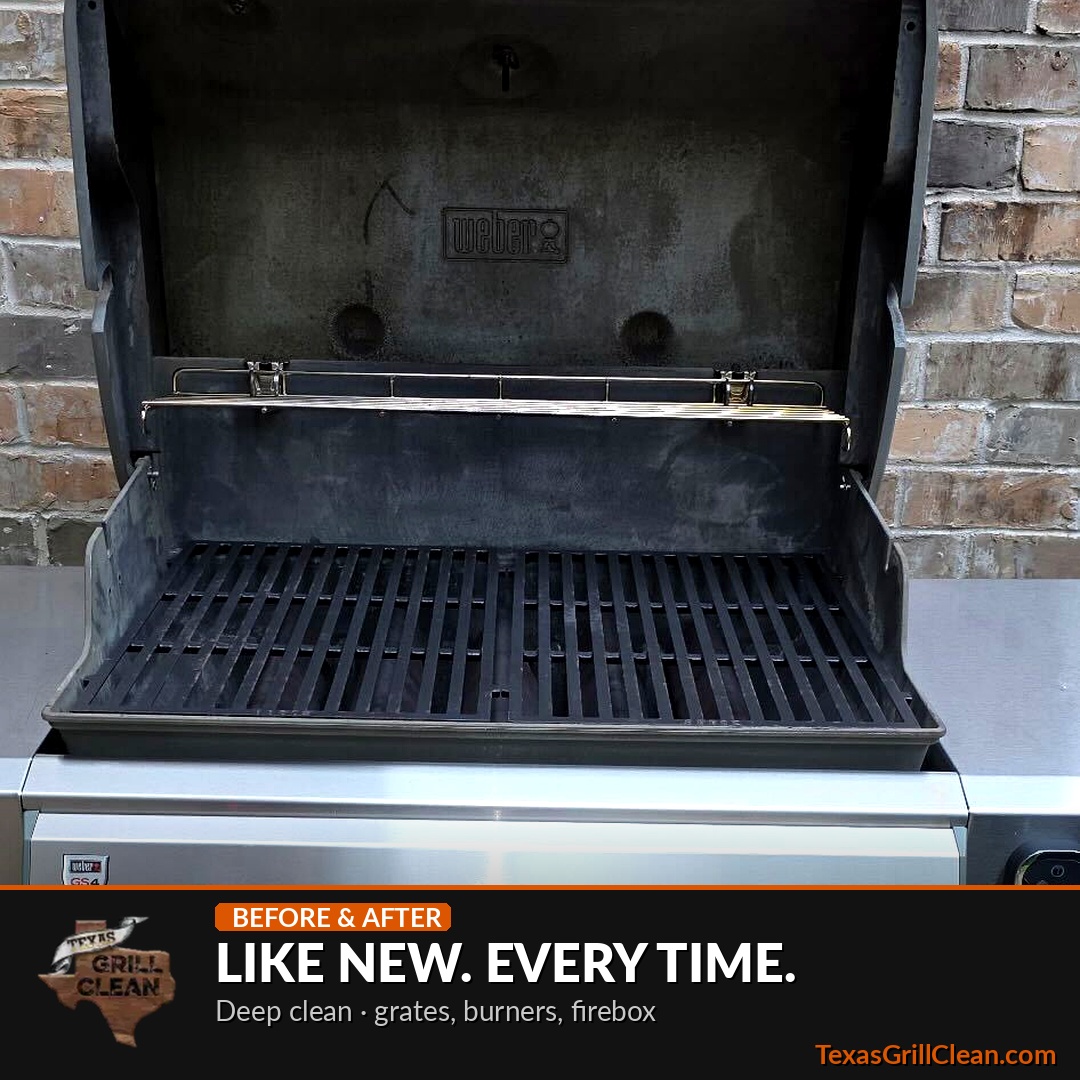
Because a turkey is the longest, fattiest cook most grills see all year. Three hours of dripping fat on top of last summer’s burger grease is how flare-ups start. The NFPA tells homeowners to keep the grill clean by removing grease and fat buildup from the grills and in trays below the grill. A clean grill also heats more evenly, so one side of the bird does not cook faster than the other. Our guide on preventing grease fires covers the full checklist.
Ten-minute pre-turkey check you can do this weekend:
- Empty and wipe the grease tray and catch cup.
- Scrape the grates with a grill brush or a wad of foil held in tongs.
- Light each burner. Look for blue flames along the whole tube. Yellow, lazy, or missing flames mean a clogged burner.
- Check the propane tank. Running out at hour two is a holiday tradition nobody wants. Keep a spare.
What our techs see
Every November our techs open up grills that look fine from the outside and find a firebox lined with a summer’s worth of grease, plus a drip tray that has not been emptied since Labor Day. Those are the grills that flare up an hour into a long cook. We also see burners with a dead section from spider webs or rust, which leaves one side of the grill running cold. A turkey sitting over that cold zone takes longer and cooks unevenly.
Where DIY stops
Scraping grates and emptying a grease tray is a homeowner job. Call a pro if you smell gas, if a burner will not light or only lights on one end, if flames are yellow and won’t turn blue, or if the firebox has thick, caked-on grease you can’t reach. Those are signs of a gas, burner, or buildup problem that needs more than a brush.
Get your grill turkey-ready in Dallas-Fort Worth
Texas Grill Clean has cleaned and repaired DFW grills since 2015. Our professional grill cleaning takes the firebox, burners, grates, and grease system down to clean metal, so your grill heats evenly and the turkey tastes like turkey, not last summer. We serve homes across the metroplex, from Frisco to Fort Worth. Call (817) 791-4606 or book online before the holiday rush.
Cooking a turkey on a gas grill: FAQ
Can you cook a whole turkey on a gas grill?
Yes. The USDA says a whole turkey can be cooked on a covered outdoor gas grill with indirect heat, as long as it is completely thawed and not stuffed. Turn off the burner under the bird, set it in a roasting pan, and cook with the lid closed until a food thermometer reads 165°F in the thigh, wing, and breast.
How long does it take to grill a turkey on a gas grill?
The USDA estimates 15 to 18 minutes per pound in a covered grill, so a 12-pound turkey takes roughly three to three and a half hours. Wind, cold DFW mornings, and how often you lift the lid all add time. Always go by a food thermometer reading 165°F, not the clock.
Should you stuff a turkey you cook on the grill?
No. The USDA warns against stuffing a turkey cooked on a grill because the low cooking temperature can take too long to bring the stuffing to 165°F. Cook the dressing in a dish in the kitchen oven or on the grill in its own pan, and put aromatics like onion and herbs in the cavity instead.
What temperature should the grill be to cook a turkey?
Aim for a steady 325°F to 350°F inside a gas grill with the burner under the bird turned off. Check it with an oven thermometer on the grate, because lid thermometers can read off by a lot. For charcoal, the USDA suggests 225°F to 300°F with a water pan underneath for moist heat.
Should I clean my grill before cooking a turkey on it?
Yes. Old grease in the firebox and drip tray can flare up during a three-hour cook and leave a bitter, smoky taste on the bird. Empty the grease tray, scrape the grates, and check that every burner lights evenly. Texas Grill Clean deep cleans gas grills across Dallas-Fort Worth before the holidays.
Written by the Texas Grill Clean team. Cleaning and repairing DFW grills since 2015.
Leave a Comment