
 3302 Westgrove Drive Arlington, TX 76001


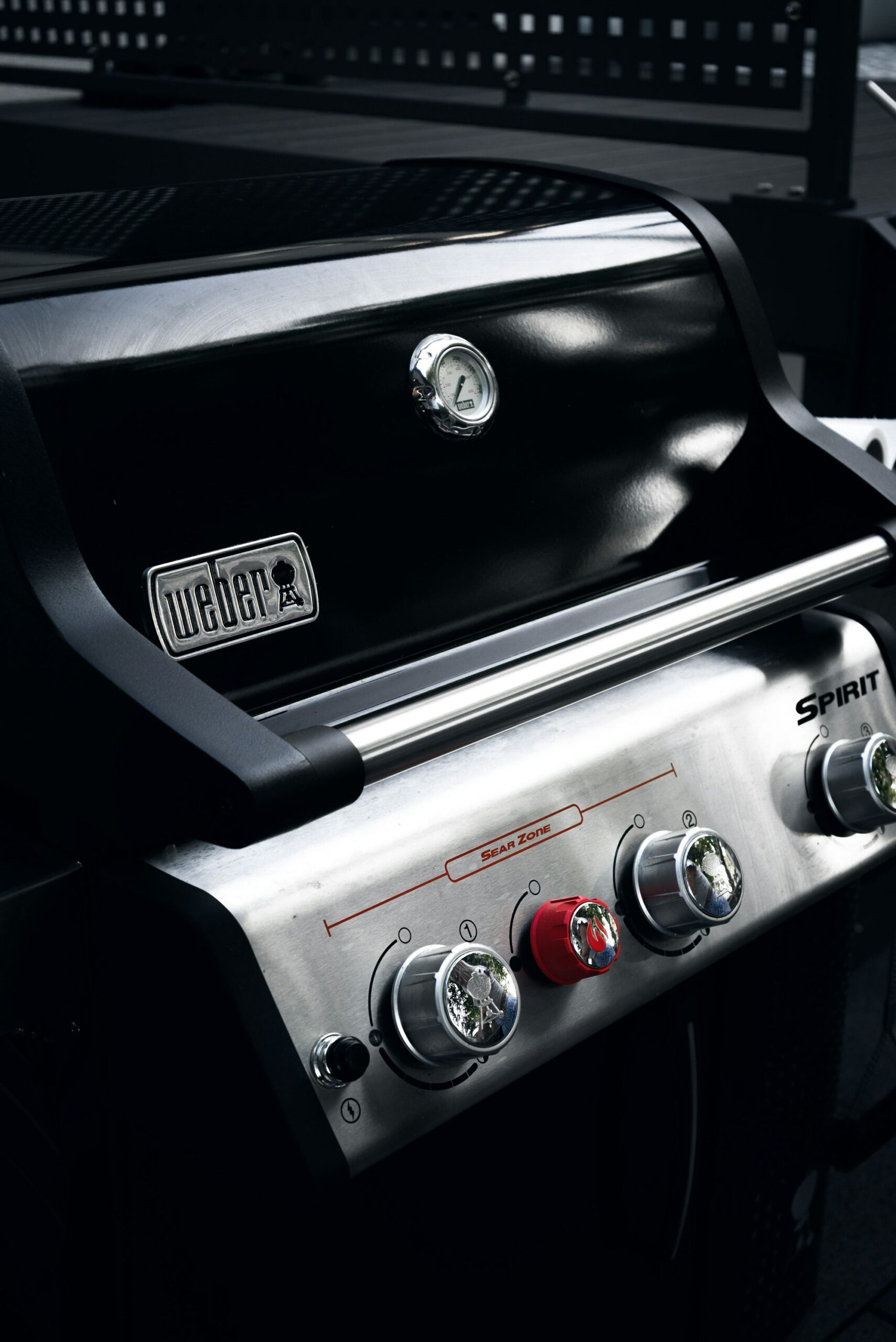
Yes. Hail one inch across or larger will dent a grill lid, crack the lid thermometer, and drive water into burner tubes and the control panel. The dents are usually cosmetic. The water is not. Check the lid seal, the gas fittings, and the burner tubes before you light it again.
Most people check the roof and the truck after a storm and forget the grill sitting out in the open. It took the same beating, and unlike the truck, a grill carries a live gas line. Here is what our crew actually finds when we open one up after a North Texas hailstorm.
How much hail does it take to dent a grill?
About one inch. That is the size at which hail starts denting metal, and it is also the point where the National Weather Service calls a storm severe.
According to the National Weather Service, the severe hail threshold was raised to one inch in diameter (quarter size) in 2010 because research showed significant damage does not occur below that size. So pea-size and dime-size hail will rattle your lid and do nothing. Quarter-size and up leaves marks.
North Texas gets plenty of both. According to the Insurance Information Institute, citing NOAA Storm Prediction Center data, Texas recorded 902 major hail events in 2025. That is more than double the next state on the list, Kansas, at 375. Texas has held the top spot for years.
Thin-gauge lids dent easiest. A Weber Genesis hood or a painted steel Pit Boss lid will show dimples that a heavy cast stainless Lynx or Blaze hood shrugs off. Powder-coated pellet grill hoppers chip at the impact point, which is where rust starts later.
What should you check on your grill right after a hailstorm?
Work through these seven checks in order, before you turn on the gas. The gas checks come first for a reason.
- Smell for gas. Stand next to the grill with the lid closed and the tank valve open. If you smell anything, stop here and shut the tank off.
- Leak test every fitting. Weber recommends mixing dish soap and water, brushing it on each connection with the gas on and the burners off, and watching for bubbles. Bubbles mean a leak. Tighten and retest. Still bubbling, leave it off.
- Look at the regulator and hose. Hail splits aged rubber. A hose with a fresh crack in it needs replacing, not taping.
- Open the lid and look for standing water. Water pooled in the firebox, the grease tray, or the burner channel is the real problem. Drain it.
- Pull the grates and flame tamers. Check whether water sat on top of the burner tubes. Wet grease turns into a paste that blocks ports.
- Test the igniter. A soaked igniter module or a wet battery box will click and not spark. Dry it out and try again before you buy parts.
- Run it on high for fifteen minutes. This drives moisture out of the tubes and the firebox. Watch the flame color while it runs.
If the flames come up yellow, uneven, or short on one side after that burn-off, something is blocked or corroded. Our post on a grill that will not get hot on one side walks through that diagnosis.
Which parts actually fail after a storm?
Lids and shelves take the visible hits. Burners, igniters, and valves take the damage that costs you money.
| Part | What the storm does | Cosmetic or functional | How to check it |
|---|---|---|---|
| Lid / hood | Dents, chipped paint at impact points | Cosmetic unless it stops sealing | Close it. Look for a gap at the front lip. |
| Lid thermometer | Cracked lens, water in the housing | Functional | Boiling water test |
| Burner tubes and venturis | Water inside, internal rust, blocked ports | Functional | Flame pattern after a 15-minute burn |
| Flame tamers / heat shields | Trapped water and grease paste | Functional | Pull and inspect both sides |
| Igniter module and wiring | Moisture in the box, corroded terminals | Functional | Listen for click, look for spark |
| Control panel and knobs | Water behind the panel, seized valve stems | Functional | Turn each knob. Stiff means water got in. |
| Side shelves and cart | Dents, bent legs, cracked wheels | Cosmetic | Check it sits level |
| Rotisserie motor | Water in the motor housing | Functional | Run it with no spit load |
Seized knobs are the one people misread most. They assume the valve is broken and start pricing a new grill. Often it is just water and old grease in the stem. We cover that in how to fix a stuck gas grill knob without breaking the valve.
What happens to a pellet grill or an outdoor kitchen after hail?
Pellet grills fail at the hopper. Built-in outdoor kitchens fail at the island, because the island holds water around the firebox.
On a Traeger, Camp Chef, Pit Boss, or Green Mountain, rain that gets past the hopper lid soaks the pellets. Wet pellets swell and jam the auger. Traeger support states that most auger jams are caused by wet or compromised pellets, and that the hopper needs to be emptied completely when swollen pellets are the cause. Vacuum out the hopper and the firepot, discard every wet pellet, and prime the auger before you light it.
Built-ins are a different problem. A Blaze, Lynx, Coyote, or DCS drop-in sits in a masonry island with nothing above it. The lid takes the full hit, and the island cavity collects water around the firebox, the drawers, and the gas manifold. Standing water in an island is how manifolds and orifices corrode. If your island vents are blocked with debris, that water has nowhere to go.
Homeowners in Plano, Frisco, and McKinney call us most often about this one, since newer builds out north have more built-in islands and no cover over them. We service the whole metro, and the service areas page has the full list.
Is a dented lid worth fixing?
Only if it stopped sealing. A dent that does not affect the seal is a looks problem. A lid that no longer closes flush costs you heat on every cook.
Close the lid and run your eye along the front edge. Light coming through, or a gap you can slide a finger into, means you are venting heat. That shows up as longer preheats and a grill that will not hold temperature for low-and-slow.
Hail chips matter more than they look, because bare metal under a chipped coating is where rust takes hold and then spreads under the paint. Our guide on whether grill rust is cosmetic or structural shows what to look for. If the firebox is cracked or the lid hinge is bent past straightening, you are into replacement territory, and repair or replace a built-in grill lays out that math.
Does homeowners insurance cover a hail-damaged grill?
It depends entirely on your policy, and we are not the ones to tell you what yours says.
Coverage for outdoor appliances varies by carrier and policy form. Some treat a built-in grill as part of the structure. Some treat a freestanding grill as personal property with its own limits. Call your agent and ask directly. What we can tell you is what adjusters ask for: dated photos and a written description of what failed. Take pictures before you clean anything up.
When should you call somebody instead of doing it yourself?
Call when it involves gas, when the burners still misbehave after a burn-off, or when you cannot see the parts you need to inspect.
Drying out an igniter and vacuuming a hopper is homeowner work. A leaking fitting, a corroded manifold, or a burner that will not carry flame across all its ports is not. Those are the failures that turn into flare-ups and grease fires later.
Most storm damage inside a grill stays invisible until somebody pulls the grates, flame tamers, and burners out and looks underneath. That is what a grill restoration and deep cleaning involves, and it starts at $239. If the teardown turns up a bad burner or valve, that moves to gas grill repair, quoted after we see the parts. Estimates are free. Full numbers are on the pricing page.
Frequently asked questions
Can hail crack a grill’s lid thermometer?
Yes. The lid thermometer is glass or thin plastic in a metal bezel, and it sits on the highest point of the lid. Hail hits it directly. A cracked lens lets water into the probe housing and the reading drifts. Replace the whole gauge rather than sealing the lens, then confirm accuracy with a boiling water test.
Should I cover my grill during a hailstorm?
A grill cover helps with rain and pollen, but it will not stop a one inch hailstone. Fabric does not absorb that kind of impact. Rolling the grill into a garage or under a solid structure is the only thing that reliably protects the lid and control panel. Move it before the storm, not during.
Will water in the burner tubes ruin them?
Not right away, but standing water inside burner tubes and venturis rusts them from the inside out, and that is where burners usually fail first. Run the grill on high for fifteen minutes after a storm to drive the moisture out. If the flames still look uneven a day later, the ports are likely blocked.
How do I know if my grill is safe to light after a storm?
Check three things before you light it. Look for a gas smell, run a soapy water leak test on every fitting, and confirm nothing is sitting in standing water. If any fitting bubbles, if you smell gas, or if the grill is plugged into a wet outlet, leave it off and get it looked at.
Can hail damage a built-in grill inside an outdoor kitchen?
Yes, and it is often worse. A built-in sits in a masonry island with no walls above it, so the lid takes the full hit while the island holds water around the firebox and drawers. The lid, the control panel, and the vent cutouts are the usual damage points on Blaze, Lynx, Coyote, and DCS units.
Does a dented lid void my grill’s warranty?
Warranty terms differ by brand, and most cover manufacturing defects rather than storm damage. Check your own paperwork before you assume either way. What matters more for function is whether the lid still seals and latches. A lid that no longer closes flush costs you heat retention on every cook.
How much does it cost to clean and inspect a grill after a storm?
A professional grill deep clean starts at $239 and includes a full teardown of the grates, flame tamers, and firebox, which is when storm damage actually becomes visible. Repairs to burners, igniters, or valves are quoted separately once we see the parts. Estimates are free.
Get your grill checked after the next storm
If a storm rolled through and your grill is acting different, do not guess at it. Book an appointment or call (817) 791-4606 and we will tear it down, tell you what the hail actually cost you, and give you a straight answer on whether it is worth repairing.
Texas Grill Clean is part of 1st Choice Residential. Veteran-owned, locally owned, licensed and insured, serving Dallas-Fort Worth since 2009. 3302 Westgrove Drive, Arlington, TX 76001.