
 3302 Westgrove Drive Arlington, TX 76001


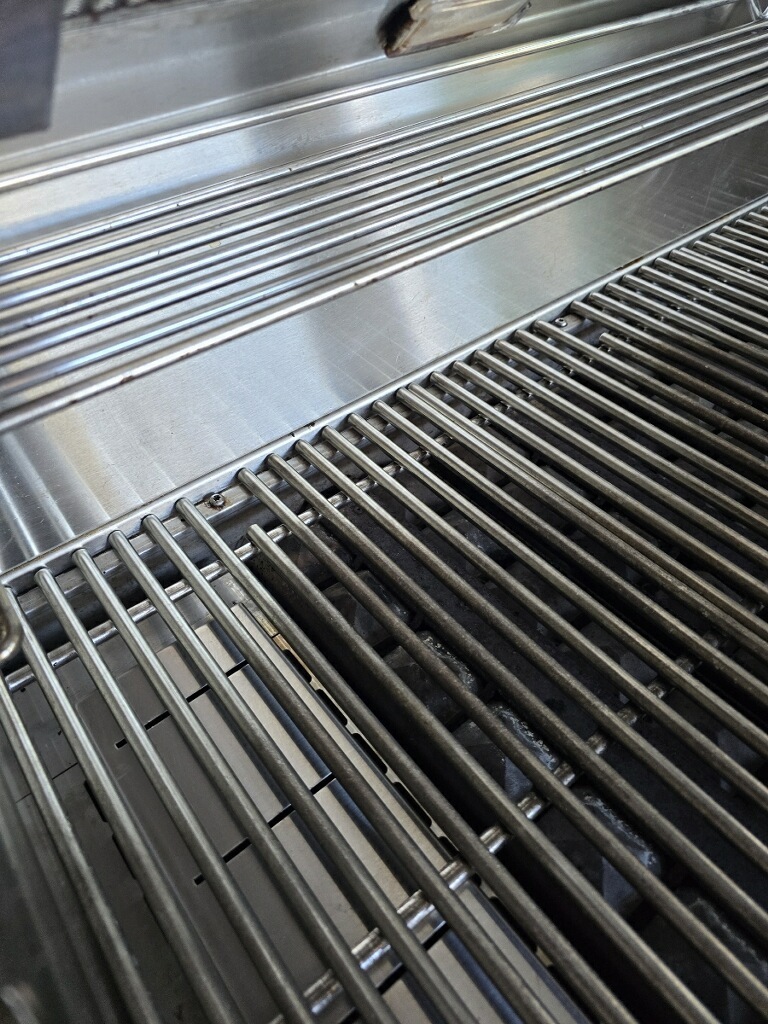
A gas grill that won’t sear is running too cool at the cooking grate, not in the hood. Searing needs grate-surface heat above roughly 500°F. Carbon crust on the grates, grease-soaked flame tamers, and clogged burner ports all steal that heat before it reaches your steak. Clean those three parts and most grills sear again.
This is one of the most common complaints we hear from homeowners in Colleyville, Grapevine, and Southlake. The grill lights. The knobs work. The hood thermometer even says 550. But the ribeye comes off gray and steamed instead of crusted and brown. Nothing is broken. The heat just isn’t getting where it needs to go.
Why won’t my gas grill sear steaks anymore?
Your grill lost searing power because heat is being absorbed or blocked on its way from the burner to the meat. A sear is a surface reaction. It happens where the steak touches hot metal, so what matters is how hot that metal is and how fast it can dump heat into the meat.
Four things kill that transfer:
- Carbon buildup on the grates. Baked-on grease turns into a hard black crust. Carbon is a poor conductor. A crusted grate can be sitting in a 550°F firebox and still give up far less heat to the steak than a clean one.
- Greasy flame tamers or heat deflectors. These metal tents sit over the burners and spread heat sideways. Caked in old drippings, they reflect and radiate much less upward.
- Clogged burner ports. Grease and rust plug the small holes along each burner tube. Fewer working ports means less flame and a cooler firebox.
- A hood thermometer that lies. The gauge in the lid reads air temperature several inches above the food. It tells you almost nothing about what the grate itself is doing.
If your food also tastes off, the same buildup is usually behind it. We covered that in why grilled food tastes bitter.
How hot does a grill need to be to sear a steak?
Browning starts around 285°F, but a real steakhouse crust needs grate contact well above 500°F. According to Science of Cooking, the Maillard reaction, which is the chemistry that creates browning and roasted flavor, begins around 140°C, or about 285°F. That’s the floor. It is not the target.
The reason you want more is speed. At 285°F the surface browns slowly, and slow browning means the inside overcooks before the outside crusts. Higher grate temperature browns the surface fast enough that the middle stays where you want it.
Here’s the working reference our crew uses:
| Grate surface temperature | What you get |
|---|---|
| Under 285°F | No browning. The steak steams in its own moisture. |
| 285°F to 400°F | Slow, pale browning. Gray band under the surface. |
| 450°F to 550°F | Good crust on a standard gas grill. This is the practical target. |
| 600°F and up | Fast, dark crust. Typical of infrared sear burners and cast iron grates. |
For reference on what a healthy grill should produce, Weber’s consumer support states that all Weber gas grills are designed to reach 500°F to 550°F with the burners on high and the lid closed after about 10 to 15 minutes. If your Genesis or Spirit tops out at 375°F on high, that’s a diagnostic result, not a preference. Something is restricting gas, air, or heat flow.
How should I preheat a gas grill for searing?
Preheat with the lid closed, on high, for a full 10 to 15 minutes, then burn off and brush the grates before the food goes on. Most people cut this short by half and then blame the grill.
- Open the propane tank valve slowly and all the way, then wait about a minute for the line to pressurize. Opening it fast can trip the regulator into bypass mode, which starves every burner.
- Light the burners and set all of them to high.
- Close the lid. Leave it closed for 10 to 15 minutes. The grates need that time to soak up heat, and open-lid preheating heats air instead of metal.
- Brush the hot grates with a clean, bristle-free grate brush or a scraper. Loose carbon comes off far easier hot than cold.
- Dry the meat with paper towels. Surface water has to boil off before browning can start, and that stalls the sear.
- Lay the steak down and leave it alone. Moving it early breaks the contact that builds the crust.
If step 3 never gets you past 400°F, stop tuning technique and start inspecting hardware.
Do cast iron grates sear better than stainless?
Cast iron holds more heat than stainless of the same size, so it recovers faster when cold meat hits it and leaves darker marks. That’s the real difference. It is mass, not magic.
| Grate type | Sear performance | Care tradeoff |
|---|---|---|
| Porcelain-coated cast iron | Strong. Heavy, holds heat well. | Chips if scraped hard. Rusts fast where the coating breaks. |
| Bare cast iron | Strongest marks of the common types. | Must stay seasoned. Rusts quickly in DFW humidity if neglected. |
| Heavy stainless rod | Very good. Common on Blaze, Lynx, Coyote, and DCS built-ins. | Low maintenance. Discolors with heat, which is normal. |
| Thin stainless or chrome-plated | Weakest. Not enough mass to hold heat. | Cheap to replace. Plating flakes off over time. |
Upgrading grates only helps if the burners underneath are actually producing heat. We see homeowners in Keller and Grapevine buy $300 grates for a grill whose real problem was a spider web in the venturi tube. If you want the cast iron route done right, our guide to restoring and seasoning cast iron grates in DFW walks through it.
When is a bad sear a repair problem instead of a cleaning problem?
It’s a repair problem when the grill still can’t reach 500°F after the grates, flame tamers, and burners are clean. At that point you’re looking at gas delivery or a failed component.
Signs it has crossed into repair territory:
- Yellow or orange flames instead of blue after cleaning, which points to an air-to-gas mixture problem at the venturi or orifice.
- Flames that shrink or drop out when you close the lid, often a regulator stuck in bypass.
- One burner noticeably weaker than the others, which is usually a cracked burner tube, a blocked orifice, or a manifold issue. We break this down in why a grill won’t get hot on one side.
- Rust holes through a burner tube. Once a tube is perforated, gas escapes below the ports and the burner never runs at full output.
That’s the line between a cleaning call and a gas grill repair call. Our techs check both on the same visit, so nobody pays twice to find out.
What does a professional deep clean actually do for searing?
It removes the insulating layer between the flame and your food, which is the single biggest recoverable loss of sear power on a used grill. A real deep clean pulls the grates, flame tamers, and burners out, degreases the firebox, clears every burner port, and cleans the drip tray.
What our crew sees in the field across Arlington, Fort Worth, and Colleyville is consistent: grills that felt weak for two seasons usually aren’t worn out. They’re buried. The firebox photos on our grill restoration and deep cleaning page show the difference in one image.
Deep cleans start at $239. Full breakdown is on the pricing page, and coverage is listed on our service areas page. If you’re local, we service grill cleaning in Colleyville along with the rest of the Metroplex.
Frequently asked questions
Why won’t my gas grill sear steaks anymore?
Heat is being blocked before it reaches the meat. Carbon crust on the grates insulates them, grease-soaked flame tamers stop radiating upward, and clogged burner ports cut total output. The grill can read 550°F in the hood while the grate itself sits far cooler. Cleaning those three parts restores searing power on most grills.
How hot should a grill be to sear a steak?
Aim for a grate surface between 450°F and 550°F on a standard gas grill. Browning chemistry starts around 285°F, but that’s too slow to build a crust before the interior overcooks. Infrared sear burners and heavy cast iron push past 600°F, which produces a darker crust in less time.
Do dirty grates stop a grill from searing?
Yes. Baked-on grease hardens into carbon, and carbon conducts heat poorly. A crusted grate transfers noticeably less heat into the steak than a clean one at the same firebox temperature. It also makes food stick, which tears the surface apart and prevents an even crust from forming at all.
How long should I preheat a gas grill before searing?
Ten to fifteen minutes with all burners on high and the lid closed. Weber states its gas grills are designed to reach 500°F to 550°F in that window. Short preheats heat the air but leave the grate metal cool, which is why steaks steam instead of sear on a grill that seemed hot enough.
Are cast iron grates better than stainless for searing?
Cast iron holds more heat for its size, so it recovers faster when cold meat lands on it and leaves darker marks. Heavy stainless rod grates on brands like Blaze, Lynx, and DCS sear very well with less upkeep. Thin stainless or chrome-plated grates lack the mass to hold heat and sear poorly.
Why do my steaks stick to the grates instead of searing?
Sticking usually means the grate was too cool, too dirty, or the meat surface was wet. Protein bonds to metal below searing temperature and releases once a crust forms. Preheat fully, brush the hot grates clean, pat the meat dry, and leave it alone until it lifts without resistance.
Can a professional cleaning bring back my grill’s sear?
In most cases, yes. A deep clean removes the carbon and grease layer insulating the grates, flame tamers, and burners, and clears blocked burner ports so the firebox reaches full temperature again. If the grill still can’t hit 500°F after that, the problem is gas delivery or a failed part, which is a repair.
Get your sear back
If your grill used to sear and doesn’t now, it’s worth 20 minutes with the grates and flame tamers out before you shop for a new one. If that doesn’t do it, we will. Book online at texasgrillclean.com/book-appointment or call (817) 791-4606. Free estimates, licensed and insured. See our full professional grill cleaning service for what’s included.
Texas Grill Clean is part of 1st Choice Residential, veteran-owned and serving Dallas-Fort Worth since 2009. 3302 Westgrove Drive, Arlington, TX 76001 · (817) 791-4606 · jeff@texasgrillclean.com