
 3302 Westgrove Drive Arlington, TX 76001


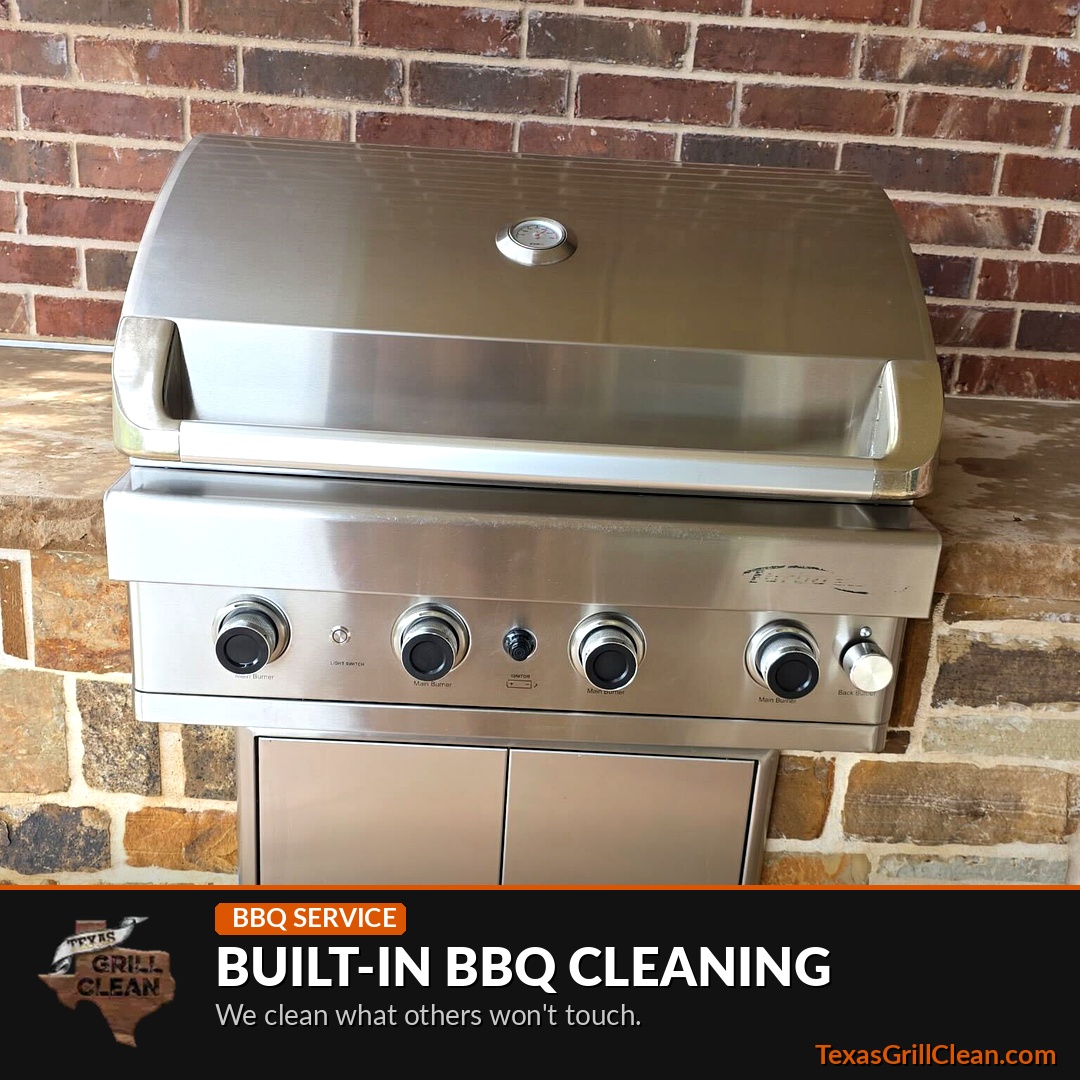
To clean a Blaze grill, run the main burners on HIGH for 10 to 15 minutes with the hood closed, let everything cool, then brush the cast stainless burners with a wire brush and clear any blocked ports with a small metal pick. Wipe the exterior with the grain using a stainless cleaner. Skip oven cleaner and steel wool.
Blaze built-ins are everywhere in Colleyville, Southlake, Grapevine, and Keller outdoor kitchens. They’re built well and priced below Lynx or DCS, which is exactly why so many DFW islands have one. The catch is that a well-built grill still fails when nobody cleans behind the flame tamers.
What makes a Blaze grill different from a standard gas grill?
Blaze grills use cast 304 stainless H-burners and heavy stainless flame tamers instead of the thin tube burners and cheap heat plates you find on box-store grills. That construction changes how you clean them.
Cast burners don’t rot out the way stamped tube burners do, but their ports still clog with carbon and grease. The flame tamers sit close over the burners and take the brunt of every drip. When those tamers cake over, heat stops spreading evenly and you get hot corners and cold middles. The firebox on a built-in also traps grease against the island walls, because there’s no open cart underneath for anything to drain into.
Blaze also puts a removable grease tray under the firebox. On a built-in island installation, that tray is the only thing between your drippings and the cabinet framing. Most homeowners forget it exists.
What does Blaze’s warranty actually cover, and what puts it at risk?
Blaze covers the major cooking components for life, but only against manufacturing defects — damage from harsh cleaners or abrasives isn’t a defect.
According to Blaze Grills’ published warranty, the main burners, cooking grids, body, flame tamers, heat zone separators, warming rack, and control valves carry a lifetime warranty against defects in manufacturing and workmanship. Ignition, electronic, and lighting systems are covered for one year from the date of purchase. The warranty applies to the original owner, requires registration within 30 days, covers parts only, and is limited to normal residential use.
That distinction matters. Oven cleaner eats the passive layer off stainless. Once a burner or grate corrodes from a chemical you chose to use, that’s not a manufacturing defect, and you’re buying the part.
How do you clean a Blaze grill step by step?
Work top down: burn off, cool, pull components, brush burners, clear ports, empty the tray, then polish the exterior last.
- Burn off the cooking surfaces. The Blaze Professional use and care guide says to turn the main burners on HIGH for 10 to 15 minutes with the hood closed so food particles and grease drippings burn away. Do this after each cook.
- Shut the gas off and let it cool completely. Knobs to OFF, supply valve closed. Nothing else happens until the firebox is cool to the touch.
- Lift out the grates, warming rack, and flame tamers. Brush them with a stainless bristle brush to knock off charred material. Heavy carbon on the tamers usually needs to soak.
- Brush the cast stainless burners. Use a wire brush on the exterior of each burner. Free any clogged ports with a small metal object, then clear debris out through the air shutter and check the burner inlet for obstructions.
- Run a rod or pipe cleaner through the venturi tubes. Spiders nest in venturis. In North Texas they do it every spring, and a plugged venturi starves the burner of gas.
- Scrape the firebox and pull the grease tray. Push carbon and grease down toward the tray, remove it, empty it, and wash it. On built-ins this is the step that matters most for fire risk.
- Wipe the exterior with the grain. Blaze says to scrub and polish in the direction of the stainless grain, avoid harsh abrasives, and use a stainless cleaner. For baked-on food, use a fine to medium grit non-metallic abrasive pad with stainless cleaner.
- Reassemble and test. Light each burner and look for an even blue flame across every port.
What should you never use on a Blaze grill?
Anything caustic, anything that scratches across the grain, and anything that puts water into the burner ports.
| Task | Use this | Avoid this |
|---|---|---|
| Cooking grids | Stainless bristle brush after a burn-off | Oven cleaner, wire wheel on a drill |
| Flame tamers | Burn-off, then scrape and soak | Degreaser sprayed onto hot metal |
| Cast stainless burners | Wire brush, metal pick for ports | Pressure washer, garden hose |
| Exterior stainless | Stainless cleaner, wipe with the grain | Steel wool, bleach, glass cleaner with ammonia |
| Control panel and knobs | Damp cloth, mild soap | Soaking, spraying near the manifold |
Steel wool is the sneakiest mistake. It leaves carbon steel particles embedded in the surface, and those particles rust. The grill looks like it’s rusting when it’s really wearing somebody else’s metal. We cover that in more detail in our guide to cleaning stainless steel without scratching or damaging it.
How often should a Blaze grill be cleaned in DFW?
Burn off after every cook, do a component clean monthly during grilling season, and get a full deep clean once or twice a year.
North Texas is hard on outdoor kitchens. Spring cedar and oak pollen settles into the firebox and mixes with grease into a paste. Summer heat past 100°F bakes that paste into carbon that a brush won’t touch. Then the humidity swings hold moisture against the metal overnight.
The safety case is straightforward. According to the National Fire Protection Association, U.S. fire departments responded to an annual average of 12,141 home fires involving grills, hibachis, or barbecues, and 20% of grilling fires were caused by a failure to clean the grill — the leading contributing factor to ignition. On a built-in, that fire is inside a cabinet attached to your house.
When is it worth calling a pro instead of doing it yourself?
Call a pro when the flame tamers are welded shut with carbon, when the burners won’t hold an even flame after brushing, or when you can’t safely reach the firebox on a built-in island.
A homeowner clean handles surface grease. A deep clean means pulling the burners, cleaning the manifold area, degreasing the firebox down to bare metal, and putting the stainless back to its original finish. Our professional grill cleaning starts at $239, and full restoration deep cleaning is quoted after we see the unit. Current rates are on our pricing page.
If a burner is cracked, an igniter is dead, or the grill won’t hold temperature after a clean, that’s a repair conversation — see gas grill repair. If the firebox itself is compromised, our guide on whether to repair or replace a built-in grill walks through the decision. We service Blaze units across Colleyville, Southlake, and the rest of our service areas.
Frequently asked questions about cleaning Blaze grills
Can you use oven cleaner on a Blaze grill?
No. Oven cleaner is caustic and strips the passive chromium layer that keeps stainless from corroding. Blaze’s care guide tells owners to avoid harsh abrasives and use a stainless steel cleaner instead. Corrosion caused by a chemical you applied is not a manufacturing defect, so the lifetime parts warranty won’t cover the replacement.
Do Blaze grills rust?
Blaze uses 304 stainless for the main components, which resists rust well, but it isn’t rustproof. Surface staining usually comes from embedded carbon steel particles left by steel wool or a cheap brush, or from grease baked into the grain. Cleaning with the grain and using a non-metallic pad removes most of it.
How do you clean Blaze flame tamers?
Run the burners on HIGH for 10 to 15 minutes with the hood closed to burn off drippings, let the grill cool, then lift the tamers out and brush them with a stainless bristle brush. Heavy carbon needs scraping and soaking. Never spray degreaser onto hot metal, and put them back in the same orientation.
Does a professional cleaning void a Blaze warranty?
No. Blaze’s warranty covers defects in manufacturing and workmanship on the main components, and routine cleaning is expected maintenance. What creates risk is the method, not who does it. Caustic chemicals, abrasive wheels, and pressure washing cause damage that isn’t a defect, which is why we don’t use them on any grill.
How much does Blaze grill cleaning cost in DFW?
Professional grill deep cleaning with Texas Grill Clean starts at $239. Built-in units in outdoor kitchens usually take longer than freestanding carts because the firebox and grease tray are harder to reach and the surrounding island needs protecting. We give free estimates, and current pricing is listed on our pricing page.
What’s the best brush for Blaze cooking grids?
A stainless bristle brush in good condition, used after a burn-off while the grates are still warm. Replace it the moment bristles start loosening. Loose wire bristles can stick to food and get swallowed. Bristle-free coil or scraper-style tools are a reasonable alternative if you’d rather not risk it.
Why does my Blaze grill heat unevenly after cleaning?
Usually the burner ports or venturi tubes are still blocked. Carbon plugs individual ports, and spider webs in the venturi restrict gas before it ever reaches the burner. Brush the burner exterior, clear each port with a small metal pick, run a pipe cleaner through the venturi, and check that the air shutters are open and clear.
Book a Blaze grill cleaning in DFW
If your Blaze is heating unevenly, flaring up, or just hasn’t been opened up in a year, we’ll handle it. Book an appointment online or call (817) 791-4606 for a free estimate.
Texas Grill Clean is the grill cleaning, repair, and restoration division of 1st Choice Residential — veteran-owned, locally owned, licensed and insured, and serving Dallas–Fort Worth since 2009. 3302 Westgrove Drive, Arlington, TX 76001 · (817) 791-4606 · jeff@texasgrillclean.com