
 3302 Westgrove Drive Arlington, TX 76001


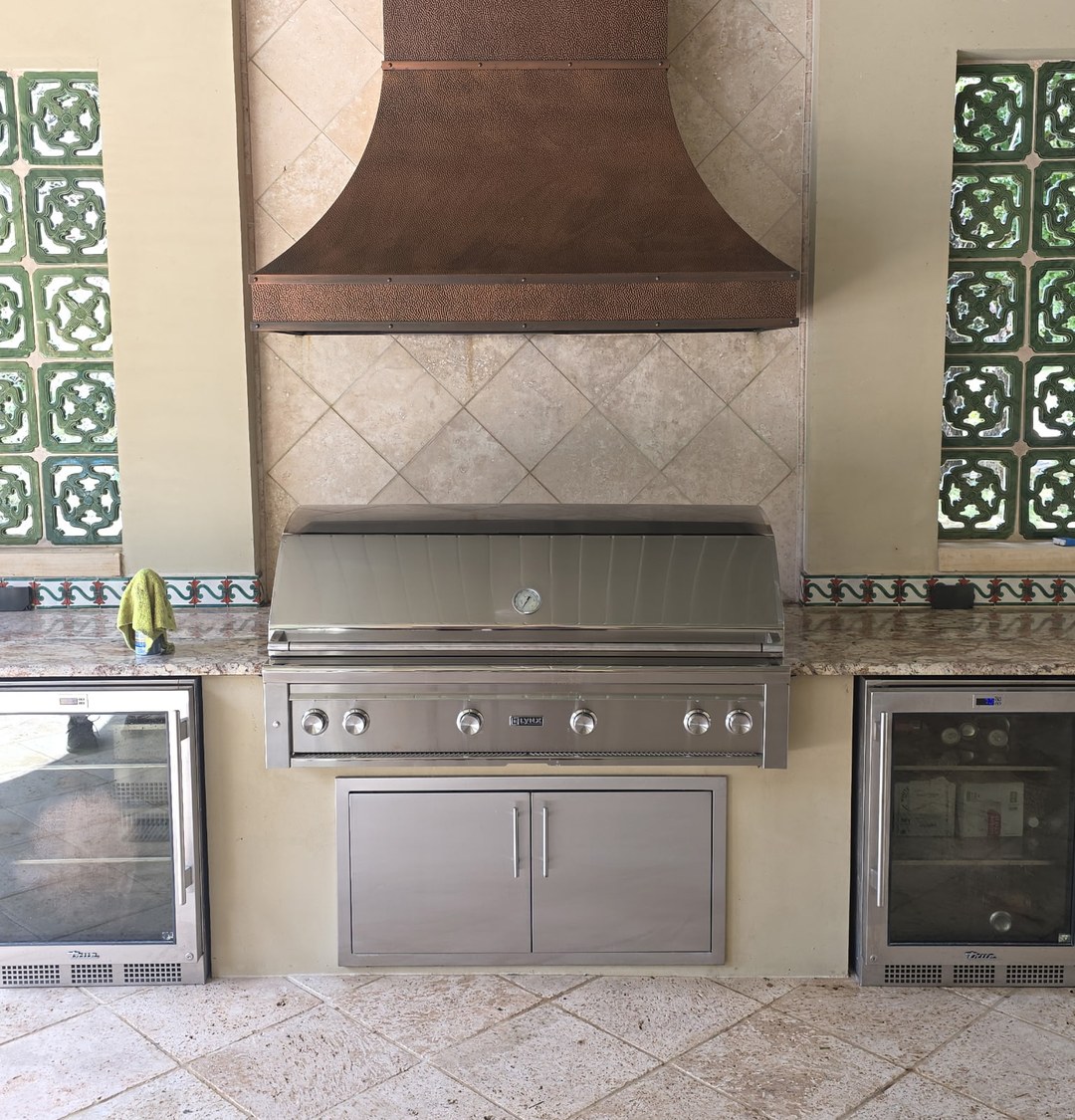
To clean a Lynx grill: burn off the ceramic briquettes on high, clear the brass burner ports with a 3/32-inch drill bit or stiff wire, wipe all stainless with a non-abrasive cleaner in the direction of the grain, and brush the ProSear screen lightly without scrubbing it. Skip oven cleaner, wire wheels, and pressure washers entirely. Those four components are what separate Lynx maintenance from cleaning a $600 box-store grill, and getting any of them wrong is expensive.
We service Lynx built-ins across Southlake, Plano, Westlake, and Highland Park outdoor kitchens. Here’s what the brand actually requires, and where we see owners do real damage with good intentions.
Why can’t you clean a Lynx the way you’d clean a Weber?
Because a Lynx uses brass burners, ceramic briquettes, and an infrared ProSear burner — three materials that all fail differently, and none of them tolerate the abrasive approach that works fine on porcelain-coated steel.
A standard gas grill is mostly stainless tube burners and coated grates. You can be reasonably rough with it. A Lynx Professional is closer to commercial kitchen equipment: cast brass burners with machined ports, a ceramic briquette tray for heat diffusion, seamless welded stainless with a directional grain, and on ProSear models an infrared burner with a woven metal screen that tears if you brush it hard.
The repair bills follow the same logic. A burner on a mid-range grill is a $40 part. On a Lynx it isn’t.
How do you clean Lynx ceramic briquettes?
You burn them off rather than scrub them. Flip the briquette tray, run the grill on high with the lid closed, and let the heat incinerate the accumulated grease. The briquettes are designed to self-clean this way — that’s the entire point of the material.
Two things to watch:
- Cracked or crumbling briquettes need replacing, not cleaning. Broken briquettes create cold spots, and cold spots are why one side of your grill sears and the other steams.
- Grease that has pooled rather than burned off means the tray was overdue. Burn-off handles residue. It doesn’t handle a season of neglect.
What’s the correct way to clear clogged brass burner ports?
Use a stiff wire or a 3/32-inch drill bit turned by hand, then tap the burner on its end outside the grill to shake residue out. Per The BBQ Depot’s Lynx service guidance, a 3/32-inch bit matches the port diameter, and a wire works for lighter blockages.
Never use a toothpick. Wood snaps off inside the port and you’ve turned a five-minute job into a burner removal. We pull broken toothpick tips out of brass burners more often than you’d think.
Clogged ports look like this from the outside: uneven flame height across the burner, yellow or orange flame where it should be blue, a burner that lights at one end and takes several seconds to carry across, or a section that won’t light at all.
What will ruin a Lynx ProSear burner?
Scrubbing the screen, and leaving sauce on it. The ProSear is an infrared burner with a woven screen. Aggressive brushing tears the weave, and once it’s torn the burner doesn’t glow evenly and can’t be repaired — it’s replaced.
The acid problem is the one nobody anticipates. Barbecue sauces, marinades, and citrus left on the ProSear’s metal components break the metal down prematurely. If you sear something sauced, wipe the burner area once it’s cool.
The other failure mode is neglect: skip cleaning the ProSear long enough and the ceramic ports clog, then crack. Light brushing on a schedule prevents the whole sequence.
What about the stainless steel itself?
Non-abrasive stainless cleaner, soft cloth, always with the grain. Stainless has a directional finish. Wipe across it and you leave visible cross-hatching that doesn’t come out.
What we see damage Lynx exteriors in DFW specifically:
| Cause | What it looks like | Prevention |
|---|---|---|
| Hard water spotting | Chalky white rings and streaks | Dry after washing; don’t air-dry |
| Wire brush on the hood | Fine scratches, embedded steel that rusts | Soft cloth only on exterior surfaces |
| Oven cleaner | Dulled, permanently clouded finish | Stainless-specific products only |
| Cedar and oak pollen | Yellow film that bonds in summer heat | Rinse and dry during spring pollen season |
| Pressure washing | Water in the igniter, valves, and wiring | Never pressure wash a built-in |
That rust-colored staining people panic about is usually not the Lynx stainless failing. It’s carbon steel particles left behind by a wire brush, oxidizing on the surface. It cleans off. The scratches underneath don’t.
The full Lynx cleaning sequence, in order
- Grill cold, gas off at the supply. Every time, no exceptions.
- Remove grates and the briquette tray. Set them on cardboard, not concrete — concrete scratches.
- Inspect the brass burners. Look down the port line for blockage, corrosion, or cracking. Clear ports with a 3/32-inch bit or wire, then tap each burner out.
- Vacuum the firebox. Grease and carbon debris out of the bottom before any liquid touches it.
- Brush the ProSear screen lightly. One direction, light pressure. If the weave looks torn, stop and get it evaluated.
- Degrease the grates. Hot water, degreaser, nylon brush. Cast stainless grates handle more than porcelain, but there’s no reason to be rough.
- Burn off the briquettes. Tray flipped, lid closed, high heat, 10 to 15 minutes.
- Stainless last. Non-abrasive cleaner, soft cloth, with the grain, then dry fully.
Budget two to three hours the first time on a grill that hasn’t had a real cleaning.
A simple Lynx cleaning schedule
Short and regular beats long and rare. Grease that sits turns hard, and hard grease is what costs you time and money. Break it into four jobs:
- Every cook: Run the ProSear on high for about five extra minutes to burn off sauces and marinades before they harden. Brush the grates while they are still warm.
- Monthly in grilling season: Empty the drip tray, wipe the stainless with the grain, and look over the burner screen.
- Once a season: Let the grill go cold, lift the grates and briquette tray, vacuum the firebox, and check the gas fittings and hose for cracks or stiffness.
- Once a year: Have the burners pulled and serviced, and the areas you cannot reach cleaned properly.
Does a dirty grill actually matter, or is this cosmetic?
It’s a fire issue before it’s a cosmetic one. According to the NFPA’s home grill fires report, U.S. fire departments responded to an average of 12,141 home fires involving grills per year between 2020 and 2024, resulting in 15 deaths, 171 injuries, and $241 million in property damage. The single leading contributing factor was a grill that had not been cleaned, accounting for 20% of those fires.
A built-in Lynx raises the stakes, because it sits inside a masonry island that’s often attached or adjacent to the house. A flare-up in a freestanding grill on open patio is a bad afternoon. The same flare-up in a built-in island is a structure fire.
When should you hand it to a professional?
When the grill is built in, when it’s been more than two seasons, or when something isn’t lighting right.
- Built-in units. Reaching the burner underside, valve area, and firebox floor means partially pulling the unit from the island. That’s not a homeowner job.
- Two-plus seasons of buildup. Carbon reaches a state where scraping does nothing and it has to be broken down chemically, then neutralized so it doesn’t attack the brass.
- Ignition or flame problems. Lynx publishes a troubleshooting resource, but if you’re past the basics you’re into gas pressure, regulators, valves, and orifices — leave that alone.
- A torn or dead ProSear. Diagnose it before you buy a part.
Our deep clean and restoration service starts at $239 and includes full teardown, brass burner service, briquette assessment, ProSear cleaning, firebox degreasing, and stainless restoration. Pricing is on our pricing page. We work throughout Southlake, Plano, and the rest of DFW.
Related reading: how to clean stainless steel without scratching it and our full outdoor kitchen cleaning guide.
Frequently asked questions
How often should a Lynx grill be professionally cleaned?
Once or twice a year for most DFW households, depending on use. A grill used most weekends from March through November should get a professional deep clean annually at minimum. Owners who cook several times a week, or who grill a lot of fatty cuts, benefit from twice a year. Between visits, brush grates after each cook and burn off the briquettes monthly.
Can I clean Lynx ceramic briquettes, or do they need replacing?
Clean them first. Ceramic briquettes are designed to self-clean by flipping the tray and running the grill on high with the lid closed, which burns accumulated grease off. Replace them only when they are cracked, crumbling, or visibly worn down, since damaged briquettes create uneven heat and cold spots across the cooking surface.
What is the right way to clear clogged brass burner ports on a Lynx?
Use a stiff wire or a 3/32-inch drill bit turned by hand to clear each blocked port, then tap the burner on its end outside the grill to empty loosened debris. Never use a toothpick, because wood breaks off inside the port and requires burner removal to extract. Clogged ports show up as uneven flame height or yellow flame.
Can I use oven cleaner or a wire brush on a Lynx grill?
No to both on exterior stainless. Oven cleaner permanently clouds the finish, and wire brushes leave scratches plus embedded carbon steel particles that rust and look like the stainless is failing. Use a non-abrasive stainless cleaner with a soft cloth, always wiping in the direction of the grain.
Why is my Lynx ProSear burner not glowing evenly?
Usually clogged ceramic ports from skipped cleaning, or a torn screen from aggressive brushing. Grease and sauce residue block the ports, which causes uneven infrared output and can crack the ceramic over time. A torn screen cannot be repaired and requires burner replacement, so have it diagnosed before ordering parts.
How much does Lynx grill cleaning cost in DFW?
Professional deep cleaning at Texas Grill Clean starts at $239. Built-in Lynx units and grills that have gone multiple seasons without service fall at the higher end, since they require more teardown time and chemical work. We quote after seeing the unit rather than guessing over the phone.
Will cleaning void my Lynx warranty?
Routine cleaning does not void coverage, but damage from improper cleaning is generally not covered under any manufacturer warranty. That includes scratched stainless, a torn ProSear screen, and burners damaged by abrasive tools. Following the manufacturer’s care guidance is what protects the warranty.
Get your Lynx back to showroom condition
A Lynx is built to last decades. What ends them early is neglect, then a well-meant cleaning with the wrong tool. We’ll do the full teardown, service the brass burners properly, tell you honestly whether the briquettes or ProSear need replacing, and restore the stainless without scratching it.
Book an appointment online or call (817) 791-4606.
Texas Grill Clean is part of 1st Choice Residential, veteran-owned and serving Dallas–Fort Worth since 2009.